Friday, August 31, 2012

Five top books on gang crime

Gavin Knight is a journalist who has written for The Times, The Guardian, The Telegraph, Prospect, Newsweek, New Statesman, Esquire, Monocle and many other publications. He has also appeared on CNN, ITN, BBC, Channel Four news and Sky News.

Over the two years prior to the publication of Hood Rat he was regularly embedded with frontline police units in London, Manchester and Glasgow as well as spending time with dozens of violent criminals involved in gun and gang crime.

With Toby Ash at The Browser, Knight named five top books on gang crime, including:
Lush Life
by Richard Price

Let’s take a look at your books now. We’re starting off with a novel set in the Lower East Side of Manhattan, which I believe was inspired by a true story. Tell us more about Lush Life.

I love this book. Richard Price is famous for his detailed research and you can see that here in his descriptions of the cops and the kids. There’s a wonderful description of one kid growing up with his abusive stepfather and reaching the age that he can start to fight back. This is something I encountered a lot when I talked to boys in the inner cities. You have an abusive father or stepfather who beats them and their mothers, and then they reach the age of about 14 and they are big enough to fight back – this is a key moment in their life.

Lush Life is about this character Eric Cash, who is out with a charismatic colleague from the restaurant they work in called Ike Marcus. Two street kids come up to them and pull a gun. Ike Marcus says to them: “Not tonight, my man”. He is then shot dead. The following police investigation is a narrative engine that allows you to deeply examine Manhattan’s Lower East Side. The book is very textured, pacey and has fantastically layered characters.

If you compare it to great New York novels like Bonfire of the Vanities, it does touch on similar themes. There are some great scenes when the lead detective finds sweatshops and apartments overcrowded with illegal immigrants. There are great metaphors in the book for the ant-hill, termite-type living that goes on in New York.
Read about the other books Knight tagged at The Browser.

--Marshal Zeringue

Thursday, August 30, 2012

Top ten books about the darker side of adolescence

Sam Mill's books include A Nicer Way to Die, The Boys Who Saved the World, and Blackout.

In 2006 he named a top ten list of books about the darker side of adolescence, including:
Boy Kills Man by Matt Whyman

Many of the best teen books highlight real problems happening in the world today and Boy Kills Man is a perfect example. Inspired by the true story of child assassins in Colombia, it tells the tale of Sonny, aka Shorty, who is hired by the crime lord El Fantasma to become a assassin on the streets of Medellin. It is a powerful and moving book that swings between tenderness and brutality. Whyman takes care not to moralise or offer easy answers - Sonny is a complex character who does the wrong things for what he believes are the right reasons.
Read about the other books Mills tagged at the Guardian.

--Marshal Zeringue

Wednesday, August 29, 2012

Top 10 psychedelic non-fiction books

John Higgs is the author of I Have America Surrounded: The Life of Timothy Leary, published in America by Barricade Books; it is the first full biography of the pioneer of psychedelic drugs.

Winona Ryder, Leary's goddaughter, wrote the introduction.

In 2006 Higgs came up with a top ten list of psychedelic non-fiction books for the Guardian. (Of course, the list has 11 titles.)

One title on the list:
The Electric Kool-aid Acid Test by Tom Wolfe

This is Wolfe's account of life with Ken Kesey, the Merry Pranksters and the birth of the American west coast psychedelic movement. Wolfe knew that a detached, even-handed journalistic approach could never really explain what was happening, so he gave his book the same psychedelic viewpoint as his characters. The result is a wonderful piece of writing. For those of us who weren't born in the 60s, this is probably the closest we can get to experiencing it.
Read about the other books on the list.

--Marshal Zeringue

Tuesday, August 28, 2012

Five top books about pulp fiction

One title on the Barnes & Noble Review's list of five top books on the glorious age of pulp fiction storytelling, collected, revisited, and re-imagined:
The Astounding, The Amazing, and the Unknown
by Paul Malmont

Returning to the fertile genre excavation that made The Chinatown Death Cloud Peril such a delight, Malmont mixes fact and fiction in this new Word War II-era yarn, which begins as the U.S. Government gathers together America's finest science-fiction writers, including Isaac Asimov and Robert A. Heinlein. Their mission: aid the war effort and defeat Hitler's hoardes by making such sci-fi staples as invisibility, force fields, and death rays into reality. This charge will take the assembled authors from the Philadelphia Naval Yard to the far reaches of the Pacific, with a cameo from L. Ron Hubbard along the way, in an adventure reminiscent of Alan Moore's comic-book classic The League of Extraordinary Gentleman.
Read about the other books on the list.

See My Book, The Movie: The Astounding, the Amazing, and the Unknown.

--Marshal Zeringue

Monday, August 27, 2012

Five top books about the decline of England

John Sutherland is Emeritus Lord Northcliffe Professor of Modern English Literature at University College London and a former long-time faculty member at the California Institute of Technology. He is author of over 20 books, editor of 30 more, and a regular columnist and critic on radio and television.

His books include Lives of the Novelists: A History of Fiction in 294 Lives.

One of Sutherland's five favorite novels about the decline of England, as told to the Wall Street Journal:
England, England
by Julian Barnes (1998)

Here is a work of virtuosic Anglophobic satire. A financier cum newspaper tycoon, Sir Jack Pitman (transparently based on the seven-years-dead Sir Robert Maxwell), resolves to create a theme-park England on the Isle of Wight (in the English Channel). It is called, in Disney-esque fashion, "Englandland." Old England can't compete. The novel is based on the conceit than the country has nothing left but its "heritage." And Pitman's replica will be more real, more sanitary—above all more salable—than the real thing. Ironists will note that, to celebrate Queen Elizabeth's diamond jubilee earlier this year, the nation did a bit of ersatz staging itself, mounting a replica of the Thames flotilla pageant of 1662.
Read about the other novels on Sutherland's list.

--Marshal Zeringue

Sunday, August 26, 2012

The 25 greatest rock memoirs

One title on Rolling Stone's list of the 25 greatest rock memoirs of all time:
Ronnie Spector: Be My Baby: How I Survived Mascara, Miniskirts, and Madness (1989)

The New York doll of the Ronettes had one of rock & roll's biggest voices. She also had one of rock & roll's most famously nightmarish marriages, as she was practically kept captive by Phil Spector for years. But if you're looking for self-pity, you'll be disappointed, because her book, like her voice, is full of cocky, smart, self-aware humor. And yes, in case you were wondering, it totally sucked to be married to Phil Spector.
Read about the other titles on the list.

Also see: Greil Marcus's list of five of the best books on rock music, Samuel Muston's ten best music memoirs, Kitty Empire's best rock autobiographies.

--Marshal Zeringue

Saturday, August 25, 2012

Five top books on seafood

One title on the Barnes & Noble Review's list of five top books on seafood:
The Story of Sushi
by Trevor Corson

The definitive work on the complex history of what seems like a simple cuisine: raw fish and rice. Trevor Corson, author of The Zen of Fish and The Secret Life of Lobsters, unveils the surprising origins of sushi and takes readers behind the scenes to observe what goes into a sushi chef's training. Assembled with the care and attention to detail of a great sushi creation.
Read about the other books on the list.

--Marshal Zeringue

Friday, August 24, 2012

Top ten books on heroes

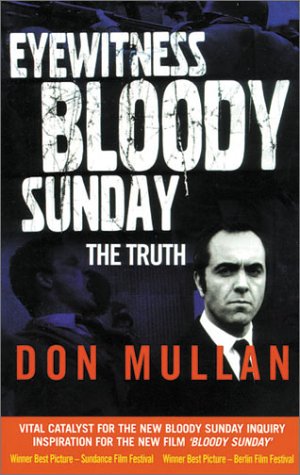
Don Mullan is the author of Eyewitness Bloody Sunday, a book critical in reopening the British government's inquiry (over 25 years later) into what became known as Bloody Sunday. Bloody Sunday was January 30, 1972, a day when thirteen civilians were killed by British soldiers during a civil rights march in North Ireland.

Paul Greengrass, perhaps better known to Americans as the director of The Bourne Supremacy (2004) and United 93 (2006), made a film (co-produced by Mullan) titled Bloody Sunday (2002) about those events.

In 2006 Mullan named his top ten books on heroes for The Guardian, including:
Long Walk to Freedom: The Autobiography of Nelson Mandela

On May 10 1994, together with a friend from Ireland, I was swept along by a tidal wave of humanity into the grounds of Union Buildings, Pretoria, for Nelson Mandela's inauguration as President of the Democratic Republic of South Africa. His autobiography tells the story of the institutional racist brutality that failed to break the spirit of a nation. Amazingly, a man who during the Thatcher/Regan era was officially considered a terrorist presided over a miraculously peaceful transition of power. Mandela is, and will forever remain, the beacon of all Africa and a source of inspiration for the earth's most abused and exploited continent.
Read about the other titles on the list.

Long Walk to Freedom is one of Sammy Perlmutter's five best books from Nobel winners who didn't win their medal for literature.

--Marshal Zeringue

Thursday, August 23, 2012

Top ten books that entertain and inspire

Sara Grant was born and raised in Washington, Indiana, a small town in the Midwestern United States. She graduated from Indiana University in Bloomington, Indiana, with degrees in journalism and psychology, and later she earned a master’s degree in creative and life writing Goldsmiths College, University of London.

Grant is senior commissioning editor for Working Partners, a London-based company creating series fiction for children. She has worked on ten different series and edited more than 75 books.

About Dark Parties, her first young adult novel: Booklist noted that "it's really the heart-pounding rush of twists that will induce extreme page turning."

For the Guardian, Grant named her ten favorite books that dare their readers to think for themselves, including:
My Sister Lives on the Mantelpiece by Annabel Pitcher

The voice of narrator 10-year-old Jamie leaps off the page. I loved his quirky way of looking at life. His family has been devastated by a terrorist act. The book tackles many issues – racism, injustice, and bullying to name a few – but at its heart is a wonderful story of friendship and acceptance.
Read about the other entries on the list.

Visit Sara Grant's website and Facebook page.

My Book, The Movie: Dark Parties.

Writers Read: Sara Grant.

--Marshal Zeringue

Wednesday, August 22, 2012

Six beach reads where big characters live big stories

Jeffrey Robinson's new novel is Trump Tower. For The Daily Beast he tagged "his favorite throwback beach reads, those classic big summer books where big characters lived big stories," including:
The Valley Of The Dolls (1966)
by Jacqueline Susann

Just as The Best of Everything set the stage for this book, The Valley of the Dolls set the stage for Sex In The City. Three women discover the insides of show business—the tinsel, the corruption, the lies and the egos—as tinseled, corrupt, lying ego maniacal men discover the insides of these three women. Often listed as one of the best-selling American novels of all time, Susann told stories from her own experience. She was married to a press agent and, supposedly, had an affair with Ethel Merman. Go figure that one. Despite Truman Capote’s opinion, “She doesn’t write, she types,” what she did here was type a really great summer beach read.
Read about the other books Robinson tagged at The Daily Beast.

--Marshal Zeringue

Tuesday, August 21, 2012

Five top books on Dreyfus and the Belle Epoque

Ruth Harris is the author of Lourdes: Body and Spirit in the Secular Age. A fellow and tutor at Oxford University, she has written widely on topics in French history, cultural history, women’s history, and the history of medicine.

Her latest book is Dreyfus: Politics, Emotion, and the Scandal of the Century.

With Toby Ash at The Browser, Harris discussed five books on Dreyfus and the Belle Epoque, including:
The Guns of August
by Barbara W Tuchman

This book marks the end of the Belle Epoque, charting the outbreak of World War I. Please tell us more.

This is a very strange book for me to choose. For many people, it is the ultimate old-fashioned diplomatic history. But it enthuses me for several reasons. First of all, it’s an extraordinary narrative. It reads magnificently and is a breathtaking horizon of events and people. Secondly, like me, she is obsessed with people. In the first chapter we have the funeral of Edward VII in 1910, which is attended by 10 European kings. She uses this funeral as a way of demonstrating the fundamental contradiction of pre-war Europe, in which increasingly bourgeois, urban, sophisticated industrial societies remained none the less monarchical, with only France as a major Republican power. Militarism and court cultures intermingled to an extraordinary extent.

What Tuchman does so well is to document the kind of thought patterns that pervaded the many national rivalries, which was all to do with imperialism, social Darwinism, but, above all, military planning and strategy. Again, what I love about this book, and in this way there’s an affinity between Tuchman and me, is that it describes the importance of irrational forces and charts their implications. She tries to look at why the war took the course that it did and discovers the many miscalculations of the leaders at the same time as describing their utter inability to shift course. Like the soldiers in the trenches that lined the Western Front after the Battle of the Marne, decision-makers simply dug in and a generation of men were lost. Leaders, for example, couldn’t grasp that free trade wouldn’t make a short war and peace inevitable. The Germans didn’t realise that by invading Belgium they actually invited the British into the war.

I also love the book because it is a history within a history. It became an immediate bestseller when it came out in 1962 and was the bible of key Cold War politicians, particularly US President Kennedy. What interested them was how to learn not to make the same mistakes. Apparently Kennedy kept citing it during the Cuban missile crisis where he resisted the advice of the military top brass. The shadow of World War I and the terrible mistakes and miscalculations of that war were constantly on his mind. His handling of the Cuban missile crisis was probably his finest achievement in an otherwise lacklustre presidency. Rarely are there lessons in history in an obvious or reductive sense, but in this instance this book seems to have had an important influence on how a president faced a terrible crisis.
Read about the other books Harris tagged at The Browser.

The Page 99 Test: Ruth Harris's Dreyfus.

--Marshal Zeringue

Monday, August 20, 2012

Top ten books about maverick women

Mary Watson won the 2006 Caine prize for African writing for her short story "Jungfrau" from her 2004 collection, Moss.

In 2006 she named her top ten books about maverick women, including:
Tracks by Louise Erdrich

This book begins with my favourite opening line ever: "We started dying before the winter and, like the snow, we continued to fall." I stumbled upon this book in the early days of writing my collection of interlinking stories, and was happy to find a writer who did it so well. Louise Erdrich links stories of dispossessed people amongst the Chippewa and her maverick woman character, Fleur, has remained vivid in my memory these last 10 years.
Read about the other books on the list.

--Marshal Zeringue