Tuesday, September 30, 2014

Top ten walks in books

Duncan Minshull is the editor of While Wandering: A Walking Companion.

One of his top ten walks in books, as shared at the Guardian:
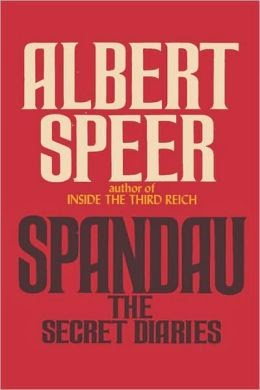
Spandau: The Secret Diaries by Albert Speer

While incarcerated, Hitler’s architect described how he succeeded in walking around much of the world, from Europe to Asia, though not by way of China. China, a communist state, had to be avoided. How did he do this? Well, he left his cell for a small prison garden and imagined that every step he took there stood for so many hundreds of miles. It was an exercise of will and an antidote against “endless boredom”. You could say that writing about it made Speer an early psychogeographer.
Read about the other entries on the list.

--Marshal Zeringue

Monday, September 29, 2014

Top ten books about losing one's virginity

At the Daily Express, Radhika Sanghani recommended ten top books about losing one's virginity, including:
ON CHESIL BEACH, BY IAN MCEWAN

This novel tells the story of a young couple. You hear their love story (think Oxford village romance) and go along to their wedding.

The plot really peaks on their wedding night when Edward tries to consummate their marriage.

He fails.

A combination of nerves and over-enthusiasm on his part with her lack of understanding and fear lead to a disaster.

Florence thinks it's his fault. He thinks it's hers.

The sexual awkwardness is so bad that this couple- who were so much in love- split up.

It's agonising to read - and feels all too real.
Read about the other entries on the list.

On Chesil Beach also appears among Ella Berthoud's five top books on love, Eli Gottlieb's top 10 scenes from the battle of the sexes, and on John Mullan's lists of ten of the best honeymoons in literature, ten of the best beaches in literature, ten best marital arguments in literature, and ten of the best failed couplings in fiction.

--Marshal Zeringue

Sunday, September 28, 2014

Six domestic chillers for "Gone Girl" fans

At the Telegraph Siân Ranscombe tagged six domestic chillers for fans of Gillian Flynn's Gone Girl, including:
You Should Have Known, Jean Hanff Korelitz

You Should Have Known follows the story of Grace Reinhart Sachs, an Upper East Side therapist on the verge of releasing a book called You Should Have Known. The premise of Grace’s book is that women will construct elaborate excuses justifying the reasons behind a man’s shortcomings. We must stop doing this, is the very much married therapist’s message. Easy for her to say, with her doctor husband and her nice apartment. Then the mother of a schoolmate of her son is murdered and Grace’s doctor husband is suddenly unreachable. Yes, she should have known and readers will probably have seen it coming but it’s still definitely worth a read.
Read about the other entries on the list.

You Should Have Known is among Ellen Wehle's top seven reads for the seven deadly sins.

--Marshal Zeringue

Jay Rayner's six best books

Jay Rayner is a British journalist, writer, broadcaster and food critic.

One of his six best books, as shared at the Daily Express:
PORTNOY's COMPLAINT by Philip Roth

I read this late, in my early 20s, which is rather strange for a Jewish boy.

It's an exceptionally modern book for when it was written in the 1960s. The guy is chewing over who he is and it's invigorating, hilarious and filthy.
Read about the other books on the list.

Portnoy's Complaint is among Oren Smilansky's very funny books, David Denby's six favorite books, and Matthew Pearl's top ten books inspired by Edgar Allan Poe.

--Marshal Zeringue

Saturday, September 27, 2014

Five undeservedly forgotten sci-fi novels

Jeff Somers is the author of Lifers, the Avery Cates series from Orbit Books, Chum from Tyrus Books, and We Are Not Good People from Pocket/Gallery. He has published over thirty short stories as well.

At The Barnes & Noble Book Blog he tagged five forgotten sci-fi novels that deserve to be rediscovered, including:
Dying Inside, by Robert Silverberg

Perfectly titled, this tale of a telepath who has lived a lazy life relying on his mental powers suddenly starting to lose his ability—as we all may one day lose our sight or hearing—is subtly powerful. At first blush it seems a bit dull, and finding sympathy for the protagonist, who has wasted an incredible ability, is difficult. But his humanity gives the story its power, as he finally accepts his loss and learns to live without his gift. The final line is haunting: “Until I die again…hello, hello, hello, hello.”
Read about the other entries on the list.

--Marshal Zeringue

Peter Thiel's top six books that predict the future

Facebook investor Peter Thiel is the author of the new book, Zero to One: Notes on Startups, or How to Build the Future. One of his six favorite books that predict the future, as shared at The Week magazine:
The Sovereign Individual by Lord William Rees-Mogg and James Dale Davidson

This book breaks the taboo on prophecy: We're not supposed to talk about a future that doesn't include the powerful states that rule over us today. Rees-Mogg and Davidson argue that national governments could soon become as antiquated as 19th-century empires.
Read about the other entries on the list.

--Marshal Zeringue

Friday, September 26, 2014

Top ten books for young danger lovers

Ross Montgomery, author of The Tornado Chasers, notes that "children’s books can demonstrate a somewhat lax approach to disaster and death." One of his favorite books for danger lovers, as shared at the Guardian:
Half Bad by Sally Green

The witches in Green’s recent YA thriller are able to quickly heal themselves, which means our protagonist Nathan can withstand some truly eye-popping levels of sadistic violence. Top of these is a bracelet he’s forced to wear which, when he tries to escape from prison, covers his hand in acid. He spends the rest of the book with melted fingers, which thankfully doesn’t stop him from pummeling everyone in sight into a bloody paste.
Read about the other entries on the list.

--Marshal Zeringue

Thursday, September 25, 2014

Top twenty famously banned books

At the Telegraph Felicity Capon and Catherine Scott tagged twenty top famously banned books, including:
All Quiet on the Western Front
by Erich Maria Remarque

Written by a veteran of the First World War, this unflinching portrayal of the brutality of the conflict was banned by the Nazi government in 1933 for its apparently unfavourable portrayal of German military forces. It remains one of the most respected and renowned works of fiction on World War I.
Read about the other books on the list.

All Quiet on the Western Front is among Justin Go's ten favorite works about The First World War and Molly Schoemann-McCann's top ten books about World War I.

--Marshal Zeringue

Wednesday, September 24, 2014

Thirteen notable, often-banned, YA novels

At The Barnes & Noble Book Blog, Shaun Byron Fitzpatrick tagged thirteen favorite, occasionally-banned, YA novels, including:
Lord of the Flies, by William Golding

A high school in North Carolina voted to ban the book in the 1980s because it was “demoralizing inasmuch as it implies that man is little more than an animal.” Well…kind of. At least they got the point of it. Complaints about racism, violence, obscene language, and defamatory statements toward God and women (among other things) have also kept this book off of library shelves.
Read about the other entries on the list.

Lord of the Flies is on Matt Kraus's list of six famous books with extremely faithful film adaptations, Michael Hogan's list of the ten best fictional evil children, Danny Wallace's six best books list, Gemma Malley's top ten list of dystopian novels for teenagers, AbeBooks' list of 20 books of shattered childhoods and is one of the top ten works of literature according to Stephen King. It appears on John Mullan's lists of ten of the best pigs in literature, ten of the best pairs of glasses in literature, and ten of the best horrid children in literature, Katharine Quarmby's top ten list of disability stories, and William Skidelsky's list of ten of the best accounts of being marooned in literature. It is a book that made a difference to Isla Fisher and is one of Suzi Quatro's six best books.

--Marshal Zeringue

Tuesday, September 23, 2014

Four recent books to honor National Dog Day

Back on National Dog Day (August 26, 2014) at The Barnes & Noble Book Blog, Ellen Wehle tagged four recent books for the occasion, including:
From Baghdad, with Love: A Marine, the War, and a Dog Named Lava, by Jay Kopelman and Melinda Roth

In November 2004, Lt. Colonel Jay Kopelman was a Marine taking part in the assault on Fallujah. Lava was a five-week-old puppy abandoned in a bombed-out house. Defying regulations, Kopelman’s squad adopted the puppy, going to extraordinary lengths to keep him safe and fed (and hidden from superior officers) while in the middle of a war zone. I love this book’s mix of dark and light emotions. Kopelman writes with raw honesty about how war affects even the steeliest of soldiers, and his first meeting with Lava says a ton: “I liked that he forgave me for scaring him, I liked not caring about getting home or staying alive or feeling warped as a human being—just him wiggling around in my hands.” That kind of authenticity makes From Baghdad, with Love a truly powerful memoir.
Read about the other books on the list.

--Marshal Zeringue

Monday, September 22, 2014

Eight of the most badass ladies in all of banned literature

At The Barnes & Noble Book Blog, Shaun Byron Fitzpatrick tagged eight of the most badass ladies in all of banned literature, including:
Dewey Dell, As I Lay Dying

It’s not easy being seventeen and pregnant, especially when you’re a main character in a Faulkner novel. But Dewey Dell doesn’t just sit around and accept her bad luck, instead attempting to take ownership of her body and her destiny. The fact that she’s beaten down by male interference only shows how tough she is to be fighting against a patriarchy much stronger than she is.
Read about the other entries on the list.

As I Lay Dying is on Nicole Hill's lists of nine of the biggest martyrs in fiction and five books that, like country and western songs, tell "stories of agony and ecstasy, soaring highs and mighty powerful lows, heartache and hard living," Laura Frost's list of the ten best modernist books (in English), Helen Humphreys's top ten list of books on grieving, John Mullan's list of ten of the best teeth in literature, Jon McGregor's list of the top ten dead bodies in literature, Roy Blount Jr.'s list of five favorite books of Southern humor, and James Franco's six best books list.

The “My mother is a fish.” chapter in As I Lay Dying is among the ten most notorious parts of famous books according to Gabe Habash.

--Marshal Zeringue

Jason Segel's six favorite books

Actor Jason Segel's screenplays include Forgetting Sarah Marshall and 2011's The Muppets.

One of his six favorite books, as shared at The Week magazine:
Siddhartha by Hermann Hesse

I read Siddhartha in high school, and I carry a copy with me whenever I travel. I responded to the twists and turns of the Buddha's journey, of trying out a million different ways to live, and the very human story of an enlightened figure.
Read about the other entries on the list.

Siddhartha is among Linus Roache's six best books and Robert Irwin's top ten quest narratives.

--Marshal Zeringue