Wednesday, January 8, 2020

Ten top books about toxic masculinity

Ani Katz is a writer, photographer, and teacher. She was born and raised on the South Shore of Long Island, New York, and holds an MFA in photography from Columbia College Chicago and a BA from Yale. She lives in Brooklyn.

Katz's new novel is A Good Man.

At the Guardian she tagged ten favorite books about toxic masculinity. One title on the list:
The Wych Elm by Tana French [US title: The Witch Elm]

The banality of male entitlement is exemplified by protagonist Toby Hennessey, a “lucky” young Dubliner who is nearly beaten to death when he interrupts the burglary of his apartment. Toby retreats to his uncle’s rambling manse to recuperate, where a discovery forces him to confront gaps in his memory. What seems on the surface to be a conventional whodunnit told by a likable if somewhat obtuse narrator is actually a meditation on the dark side of privilege, and how it blinds people (men especially) to the harms they commit.
Read about the other entries on the list.

--Marshal Zeringue

Tuesday, January 7, 2020

Ten intimate stories about love & loss

Mimi Lok is the author of the story collection Last Of Her Name, published October 2019 by Kaya Press. Last Of Her Name was recently longlisted for the PEN/Robert W. Bingham Prize for Debut Short Story Collection. Lok is the recipient of a Smithsonian Ingenuity Award and an Ylvisaker Award for Fiction, and was a finalist for the Katherine Anne Porter Fiction Prize and the Susan Atefat Arts and Letters Prize for nonfiction.

At Electric Lit she tagged ten intimate stories about love and loss, including:
Sour Sweet by Timothy Mo

A Chinese family trying to make a life for themselves in ’60s England. The mother’s secret past, the father’s folly that puts everything at risk. The sinister, looming presence of the crime syndicate. Intimate, comic, and chilling. Also, possibly the best depiction in literature of the drudgery, cacophony, and adrenaline rush of working in a Chinese restaurant.
Read about the other entries on the list.

--Marshal Zeringue

Five top novels of revolution

A writer of Uruguayan origins, Carolina De Robertis is the author of the novels Cantoras, a finalist for the Kirkus Prize and a New York Times Editors’ Choice; The Gods of Tango, winner of a Stonewall Book Award; Perla; and the international bestseller The Invisible Mountain, which received Italy’s Rhegium Julii Prize.

At Book Marks she shared, with Jane Ciabattari, five great novels of revolution, including:
Notes of a Crocodile by Qiu Miaojin

This novel has been an underground queer classic in Taiwan since the early 90’s, but only appeared in English for the first time in 2017. Qiu was herself a renegade who tragically killed herself in her mid-20s; in this luminous book, her vision of lesbian desire and gender-bending transgressions in post-martial-law Taipei is so raw and viscerally rendered that you feel on every page the vast courage of coming out, and the earthquake it implies for the status quo.

JC: Qiu’s energy in response to the possibility of the freedom to be herself, as Taipei is being transformed into a more liberal city after the end of Chinese martial rule, is contagious. As she writes at the beginning of Notebook 1 of her narrator Lazi’s journal, “In the past I believed that every man had his own innate prototype of a woman, and that he would fall in love with the woman who most resembled his type. Although I’m a woman, I have a female prototype too.” She struggles with shame, with seeing her love for women a “monstrous sin,” yet as a college student she creates a community of friends who accept her choices. How do you think the surreal crocodiles work to symbolize the choices she faces?

CDeR: That’s one of the mind-blowingly brilliant elements of this book—the story of the crocodiles. It alternates with the narrator’s story, appearing intermittently as a parable, or surreal thread, or extended metaphor, and I can’t speak for all queer readers but for me it was the most incredible revelation to read. The crocodiles are mistrusted, maligned, denounced; they are forced to live in hiding; they are fetishized and exoticized by a popular culture that wants to put them in the limelight without seeing them on their own terms. Meanwhile, these crocodiles hunger only to drink their tea and be alive. The humor and absurdity weaves inextricably through the pain.

Qiu was utterly prophetic in imagining a time when LGBTQ+ lives and truths would get their Will and Grace and Queer Eye moments, to use a shorthand, becoming prurient window dressing for heterocentric culture, and yet still struggle for voice and safety. And, for queer readers, she wrote our beauty—the beauty of our hungers, their goodness and power, the joy and risk and cost of being ourselves—in the most inimitable way.

Qiu means so much to me, as a lesbian writer, and as a queer Latin American writer. Honestly, I have no words.
Read about the other entries on the list.

--Marshal Zeringue

Monday, January 6, 2020

Five books about finding hope at the end of the world

Mike Chen is a lifelong writer, from crafting fan fiction as a child to somehow getting paid for words as an adult. He has contributed to major geek websites (The Mary Sue, The Portalist, Tor) and covered the NHL for mainstream media outlets. A member of SFWA and Codex Writers, Chen lives in the Bay Area, where he can be found playing video games and watching Doctor Who with his wife, daughter, and rescue animals.

Chen is the author of the novels Here and Now and Then and A Beginning At The End.

[My Book, The Movie: Here and Now and Then.]

At Tor.com Chen tagged five books about finding hope at the end of the world, including:
The Book of M by Peng Shepherd

The cover for The Book of M uses iconography familiar to fans of post-apocalyptic media: the lone vehicle traveling down a dark road. But in the end, Peng Shepherd’s debut novel pushes beyond tropes found in other post-apocalyptic fiction towards the establishment of a new society. In this realm where memories and shadows disappear and mere ideas can become magical reality, ultimately the building blocks of civilization lay in two separate but equally important pieces of the human experience: the stories we carry with us and the search for answers. Each of these feed into the other for an emotional chicken-egg cycle that allows humanity to step forward from the shadows of devastation.
Read about the other entries on the list.

Writers Read: Peng Shepherd (June 2018).

--Marshal Zeringue

Top ten vampire books

At the Waterstones blog, Mark Skinner tagged ten top vampire books, including:
The Historian
Elizabeth Kostova

Thoroughly immersive and chillingly atmospheric, Kostova’s remarkably assured debut plunders the Dracula myth to craft a thrilling modern-day mystery with evocative echoes of medieval vampire lore. Sustaining extraordinary narrative suspense for over seven hundred pages, The Historian is a master-class in storytelling from an exceptional literary talent.
Read about the other entries on the list.

The Historian is among Lauren Owen's top ten vampire books.

--Marshal Zeringue

Sunday, January 5, 2020

Five NYC-set novels that became NYC-set films

Christian Blauvelt is an entertainment and culture journalist, who serves as the managing editor of leading film and TV industry website IndieWire. He regularly appears on CBS New York to give previews of upcoming films and awards season analysis; has hosted films on Turner Classic Movies; and has presented at South by Southwest and San Diego Comic-Con. Blauvelt is the author of books including Star Wars Made Easy and Cinematic Cities: New York - The Big Apple on the Big Screen. He lives in New York City.

At Book Marks he shared, with Jane Ciabattari, five NYC-set novels that became NYC-set films, including:
If Beale Street Could Talk by James Baldwin

Published in 1974 but urgent enough to have come out in 2019, it was turned into a stunning feature film by Barry Jenkins released last year—filmed entirely on location in Harlem. One of its actors, Brian Tyree Henry, lived just 10 blocks away from the main filming site and would just walk to the set every day.

JC: Beale Street is the only Baldwin novel with a female narrator, Tish, and its power evolves from her love for her boyfriend Fonny, who is sent to prison on false rape charges just as she discovers she’s pregnant. How do you think the flashbacks to their earlier family connections help make this love story work?

CB: Baldwin’s use of flashbacks to establish the family connections between his doomed lovers, Tish and Fonny, who are separated when he’s falsely accused of rape, situates them in the rich context of their community and heritage—but also the Sisyphean existence, generation after generation, of an African-American family trying to live and love when everything is rigged against them by a racist society determined to crush their spirit. That a love like that between Tish and Fonny can exist at all under American apartheid is an act of resistance. But no matter how much you try to transcend, the scars accumulated along the way endure, something Jenkins’ captures beautifully in Henry’s one real scene during the film, in which he, in a long single-take soliloquy, shifts from jolly reveler to a haunted ex-con talking about how he can never escape his past.
Read about the other entries on the list.

--Marshal Zeringue

Saturday, January 4, 2020

Ten top psychopathic crime & thriller characters

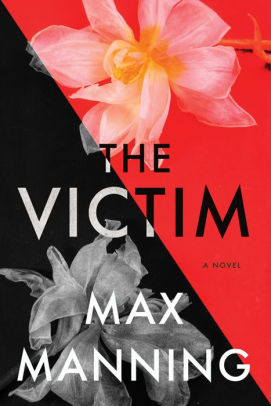
Max Manning started his career as a newspaper journalist in the United Kingdom, working for many years as a crime reporter before joining The Daily Telegraph in London as a news sub-editor. He is the author of Don’t Look Now and a psychological thriller, The Victim.

At The Strand Magazine Manning tagged his "top ten crime and thriller characters, good and evil, with psychopathic traits," including:
Amy Dunne (Gone Girl by Gillian Flynn)

Female psychopaths are relatively rarely depicted in thrillers. Research shows that there are far fewer female diagnosed psychopaths in prison populations than males but that may partly be because they rely less on physical violence, are more subtle when it comes to manipulation, and are better at not getting caught. In Gone Girl, Amy Dunne is a fascinating and incredibly complex character. She’s devious, charming, has no conscience and is willing to do whatever she needs to get what she wants, no matter who gets hurt.
Read about the other entries on the list.

Gone Girl made Steven L. Kent and Nicholas Kaufmann's list of six favorite literary human monsters, Elizabeth Macneal's list of five sympathetic fictional psychopaths, Jo Jakeman's top ten list of revenge novels, Amanda Craig's list of favorite books about modern married life, Sarah Pinborough's top ten list of unreliable narrators, C.A. Higgins's top five list of books with plot twists that flip your perception, Ruth Ware's top ten list of psychological thrillers, Jane Alexander's top ten list of treasure hunts in fiction, Fanny Blake's list of five top books about revenge, Monique Alice's list of six great fictional evil geniuses, Jeff Somers's lists of the top five best worst couples in literature, six books that’ll make you glad you’re single and five books with an outstanding standalone scene that can be read on its own, Lucie Whitehouse's ten top list of psychological suspense novels with marriages at their heart and Kathryn Williams's list of eight of fiction’s craziest unreliable narrators.

--Marshal Zeringue

Friday, January 3, 2020

The best books about the will to travel

Rob Doyle is a writer from Dublin. His first novel, Here are the Young Men, was published in 2014 by Bloomsbury and the Lilliput Press. It was selected as one of Hot Press magazine’s ‘20 Greatest Irish Novels 1916-2016’, and has been made into a film. His second book, This is the Ritual, was published in 2016 to widespread acclaim. Doyle’s new novel, Threshold, is soon fothcoming from Bloomsbury. He teaches on the MFA in Creative Writing at the University of Limerick, and lives the rest of the year in Berlin.

At the Guardian Doyle shared some of his favorite books to inspire wanderlust, including:
One lustful and wandering writer who did get out of bed was Henry Miller. For those in need of literary vitamin D to counter the winter gloom, I recommend his sun-blessed The Colossus of Maroussi. At the onset of the second world war, Miller found himself in Greece – a period of his life that left him spiritually transformed. Reading his account of those few months is like bathing in supernal light. Everything resplends. He doesn’t even bother to chuck in the sex scenes that made his other books notorious – there’s too much going on in the Aegean sky, the wine-dark sea and the Homeric landscapes.
Read about the other entries on the list.

--Marshal Zeringue

Five fantasy multiverses

A. K. Larkwood studied English at St John’s College, Cambridge. Since then, she has worked in higher education & media relations, and is now studying law. She lives in Oxford, England, with her wife and a cat. Her debut novel, The Unspoken Name, will be published by Tor in February 2020.

At Tor.com Larkwood tagged five favorite fantasy multiverses, including:
The Dark Tower series by Stephen King

Oh, The Dark Tower. Stephen King’s fantasy series deals with a legendary gunslinger who rattles through dozens of worlds, including our own, on an endless quest to reach the Dark Tower, and possibly thereby prevent the collapse of all reality. These books are all the more dear to me for being so very sprawling, flawed, nightmarish and bizarre. Should a fantasy series have an evil haunted sentient train? Should it have gun magic? A big talking bear? An apocalyptic-Western-Arthurian-science-fantasy setting? Numerology? Bird-headed people? Should the author himself appear in a cameo along with characters from many of his other books? If your answers to most of the above aren’t “obviously! of course!” then I don’t know what to say to you. Are they good books? I have no idea. The Dark Tower fascinates me. Like [Clive Barker's] Abarat, it’s an epic fantasy rendered with the specialist tools of a horror writer, which might be why it largely falls into the ‘never explain, never apologise’ category of worldbuilding above. The sheer ambitious strangeness is undeniable.
Read about the other entries on the list.

--Marshal Zeringue

Thursday, January 2, 2020

Six thrillers that feature toxic perfectionism

When not writing, Sherri Smith spends time with her family and two rescue dogs, and restores vintage furniture that would otherwise be destined for the dump. She lives in Winnipeg, Canada, where the long, cold winters nurture her dark side.

Smith's novels are The Retreat and Follow Me Down.

At The Strand Magazine she tagged six thrillers that feature toxic perfectionism, including:
NINE PERFECT STRANGERS by Liane Moriarty

Like my own book, Nine Perfect Strangers is set on a luxurious wellness retreat. Each person is there to lose weight, deal with past trauma and generally undergo a spiritual transformation. The woman running the retreat, Masha, was once an over-stressed, over-worked corporate devotee until she suffered a heart-attack. Following her brush with death, Masha transforms herself and becomes a wellness extremist. She sets on a mission to help others achieve their ‘best’ selves by opening her retreat, but she quickly becomes obsessive and delusional to the detriment of her guests.
Read about the other entries on the list.

--Marshal Zeringue

Wednesday, January 1, 2020

Ten top books about new beginnings

Jaclyn Moriarty is the bestselling author of novels for young adults including Feeling Sorry for Celia, The Year of Secret Assignments, and the Colours of Madeleine trilogy. She has been the recipient of the NSW Premier’s Literary Award, the Queensland Literary Award, and the Aurealis Award for Fantasy.

Her newest novel is Gravity Is the Thing.

At the Guardian, Moriarty tagged ten special books about new beginnings, including:
Self-Help by Lorrie Moore

Most of the stories in this collection explore new beginnings of different kinds: how to become “the other woman”, how to be the child of newly divorced parents. In the succinctly titled How, we learn how to start a doomed love affair: “Begin by meeting him in a class, in a bar, at a rummage sale.” Moore’s prose is poetic, sharp and devastatingly funny. Just when you think there’s nothing new to say about relationships, Moore cracks open a fresh layer and confounds you with her insight.
Read about the other entries on the list.

--Marshal Zeringue

Good utopian books for these dystopian times

Hannah Beckerman is a London-based author and journalist.

Her newest novel is If Only I Could Tell You.

She is a freelance features writer and book critic for The Observer, the FT Weekend Magazine and The Sunday Express, a regular book pundit on The Sara Cox Show on BBC Radio 2, and regularly chairs panels, discussions and interviews at literary festivals and publishing events throughout the UK.

At the Guardian, Beckerman tagged a few novels that reveal the kindness of strangers and leave you with a sense of hope, including:
[T]here has been a trend in recent years for novels that celebrate the best of humanity. Rachel Joyce’s 2012 novel, The Unlikely Pilgrimage of Harold Fry, tells the story of one man’s journey and the community he creates along the way. It’s a beautifully written, feelgood book, which was longlisted for the Booker prize and became an international bestseller.
Read about the other entries on the list.

--Marshal Zeringue