Monday, April 4, 2022

Ten thought-provoking SFF novels

Zoraida Córdova started writing when she was thirteen years old and hasn’t stopped. As a teen, she attended the National Book Foundation’s writing camp. She studied English Literature and Latino Studies at Hunter College, and the University of Montana in Missoula, but neglected her classes in order to write the book that would be her debut novel.

Since 2012, Córdova has written more than two dozen novels and short stories for all ages, including The Inheritance of Orquídea Divina, Valentina Salazar Is Not a Monster Hunter, and Star Wars: Galaxy’s Edge: A Crash of Fate. Her 2016 novel Labyrinth Lost, book one in the Brooklyn Brujas trilogy, won an International Latino Book Award, and is under development at Paramount.

At Publishers Weekly Córdova tagged ten recent favorite SFF novels, including:
The Deep by Rivers Solomon

The Deep is inspired by the Hugo Award–nominated song “The Deep” from Daveed Diggs’s rap group clipping. Rivers Solomon takes the inspiration and makes something truly original in the story of Yetu, a member of a society of water-dwelling descendants of pregnant African slave women who were thrown overboard by slave owners. In the deep, their past is forgotten to save them from trauma. Except for Yetu, the historian—she remembers for everyone. This is Yetu’s burden. This is the recovery of memory and identity.
Read about the other entries on the list.

--Marshal Zeringue

Sunday, April 3, 2022

Five books that reveal the true source of collective power

Daisy Pitkin has spent more than twenty years as a community and union organizer, working first in support of garment workers around the world, and then for US labor unions organizing industrial laundry workers. Her essays have been awarded the Montana Prize, the Disquiet Literary Prize, the New Millennium Award, and the Monique Wittig Writer’s Fellowship. She grew up in rural Ohio and holds an MFA from the University of Arizona. Today, Pitkin lives and writes in Pittsburgh, Pennsylvania, where she works as an organizer with an offshoot of the union UNITE.

Pitkin's new book is On the Line: A Story of Class, Solidarity, and Two Women's Epic Fight to Build a Union.

At Lit Hub she tagged five "books that illuminate the lives and communities and worlds that are built inside movements of resistance, books that center on what it is possible to build, even as we act to dismantle." One title on the list:
Martin Duberman, Stonewall: The Definitive Story of the LGBTQ Rights Uprising That Changed America

“They did something few of us ever attempt. They named what a better society might look like,” Martin Duberman writes of the Gay Liberation Front, one of the organizations built in the wake of the Stonewall rebellion. This landmark book follows the intertwined lives of six people as they help to build the movement for gay and lesbian rights that was sparked, in part, by the June 1969 riots at the Stonewall Inn. In vivid, urgent detail, activist and historian Martin Duberman reconstructs the sweltering nights of the spontaneous protest at Stonewall and the often-violent repression of the cultural moment that surrounded and led to it. More importantly, the book vibrantly illustrates what happened after the rebellion ended; the piece-by-piece process by which a movement was formed that, only a year later in 1970, demonstrated its newly built strength and numbers in the first Gay Rights March.
Read about the other entries on the list.

--Marshal Zeringue

Saturday, April 2, 2022

Seven books set during spring time

Aleksandra Hogendorf is a writer currently based in San Sebastián, Spain.

At Electric Lit she tagged seven books set during spring, including:
Mothering Sunday by Graham Swift

“I want to do with you what Spring does to the cherry trees,” Neruda once famously wrote in a poem. This sentiment succinctly captures the atmosphere of Graham Swift’s Mothering Sunday, which is rich with Salter-esque sensuality set against a backdrop of a blooming spring day in the English countryside, a March day that feels like June. Mother’s Day, to be precise, traditionally a day off for servants so they could return home and visit their mothers. For Jane, a maid, this is a day of celebration, a day to do what she pleases, as she has no home to return to: a day to spend with her lover. A deliciously seductive handful of hours turns out to be a turning point in her life. Moving, dreamy, and enviously crafted.
Read about the other entries on the list.

--Marshal Zeringue

Friday, April 1, 2022

Seven notable sets of frenemies in film & fiction

Jody Gehrman is a native of Northern California, where she can be found writing, teaching, reading, or obsessing over her three cats most days. She is also the author of numerous award-winning plays and novels, including The Girls Weekend.

[Writers Read: Jody Gehrman; The Page 69 Test: Watch Me; My Book, The Movie: Watch Me]

Gehrman's new novel is The Summer We Buried.

Her Young Adult novel Babe in Boyland was optioned by the Disney Channel and won the International Reading Association's Teen Choice Award.

Gehrman's plays have been produced in Ashland, New York, San Francisco, Chicago and L.A. She and her partner David Wolf won the New Generation Playwrights Award for their one-act, Jake Savage, Jungle P.I.

At CrimeReads, Gehrman tagged seven favorite "books and films that illustrate why frenemies are here to stay," including:
Single White Female by John Lutz

The 1990 novel that spawned the iconic film starring Bridget Fonda and Jennifer Jason Leigh still resonates today. When I aspired to dress like my fashionista friend, her girlfriend jokingly accused me of “single white female-ing her,” proof that this tale of unstable female friendship still has a place in our popular imagination.

If you haven’t read the book or seen the movie, they’re both worth your time, even if just for their kitsch value in pop culture history. The spirit of the early nineties and its ham-fisted forays into third wave feminism is alive and well in both, imbuing them with a flavor that alternates between cringey and compelling.
Read about the other entries on the list.

--Marshal Zeringue

Thursday, March 31, 2022

Five of the best books about Russia & Ukraine

Orlando Figes is Professor of History at Birkbeck College, University of London. Born in London in 1959, he graduated with a double-starred First from Cambridge University, where he was a Lecturer in History and Fellow of Trinity College from 1984 to 1999.

Figes is an award-winning author of ten books on Russian and European history, including The Story of Russia.

At the Guardian he tagged "five books [that] have done as much as any to shape my understanding of the complex region," including:
Anne Applebaum: Red Famine: Stalin’s War on Ukraine

The Ukrainians call it the Holodomor – the extermination (mor) by starvation (holod) of more than four million of their countrymen in 1932-3. Nowhere else in the USSR was the famine of those years so terrible. Four-fifths of its victims were Ukrainians – peasants stripped of all their property when Stalin’s regime forced them into the collective farms and then requisitioned their last stocks of seed and food, until they starved.

Drawing on the work of Ukrainian scholars, Applebaum has given us the best account in English of Stalin’s war against Ukraine. She is sympathetic to the Ukrainian view of the famine as an act of genocide, not in the sense that Stalin sought to kill all Ukrainians, as Hitler aimed to kill the Jews, but in the sense that he intended to “physically eliminate the most active and engaged Ukrainians” in order to prevent the re-emergence of a nationalist movement led by the Ukrainian elites.
Read about the other entries on the list.

Red Famine is among Nina Krushcheva's six favorite books to help you understand the world.

--Marshal Zeringue

Wednesday, March 30, 2022

Five novels set in abandoned places

John Searles is the best-selling author of the novels Help for the Haunted, Strange but True, and Boy Still Missing.

His new novel is Her Last Affair.

At Lit Hib he tagged five "books—all of them incredible—that use abandoned places as settings," including:
Jeff VanderMeer, Annihilation

Set in an alternate reality, Annihilation by Jeff VanderMeer stars a team of four women who must venture into the unknown, deserted Area X, on a mission. Professionally, the mission is to scientifically observe the abandoned area, but, personally, the biologist is on a mission to search for her husband—who went missing on the last expedition into Area X. With their base camp set up in an abandoned tower, aided by notes left behind by previous explorers, the women race against the clock to understand the source of all the strange occurrences—before it’s too late.
Read about the other entries on the list.

Annihilation is among Rin Chupeco's five top stories where nature does its best to kill you and Nicholas Royle's ten top lighthouses in fiction.

--Marshal Zeringue

Tuesday, March 29, 2022

Five novels with criminal acts at their core

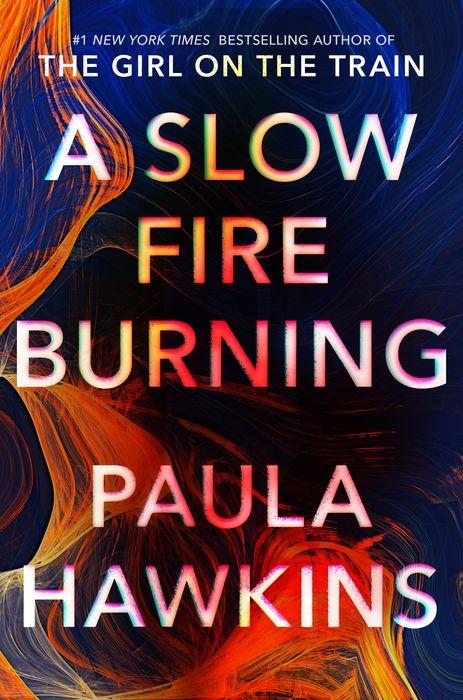
Paula Hawkins worked as a journalist for fifteen years before turning her hand to fiction. She is the author of two #1 New York Times bestselling novels, Into The Water and The Girl on The Train. An international #1 bestseller, The Girl on the Train has sold 23 million copies worldwide and has been adapted into a major motion picture. Into the Water was also a Sunday Times and New York Times #1 bestseller, selling 4 million copies worldwide. Her newest thriller is A Slow Fire Burning. Hawkins was born in Zimbabwe and now splits her time between London and Edinburgh.

At CrimeReads she tagged five novels with criminal acts at their heart, including:
No Country for Old Men by Cormac McCarthy (2005)

Is the brutality and ugliness described in Cormac McCarthy’s work all the more horrifying because of the beauty of his sentences – elegant and intricate but nevertheless pared to the bone? McCarthy leaves no place for ambiguity or ambivalence, no reason for doubt and nowhere to hide. Are his villains more terrifying for the same reason? I can think of no more frightening antagonist in modern fiction than Anton Chigurh, that ‘true and living prophet of destruction’, a relentless and pitiless assassin, subject to his own unquestionable code.

Would Irene really enjoy this western, with all its drugs and guns and blood-soaked horror? I’m fairly certain she would. Even leaving to one side McCarthy’s peerless sentences, there is much about the book I feel she would take to heart. The novel’s title is taken from Yeats’ ‘Sailing to Byzantium’, a poem which includes the line ‘An aged man is but a paltry thing, A tattered coat upon a stick’, a sentiment Irene might well recognize, as she would the feelings of nostalgia and bewilderment felt by the novel’s protagonist, the stoic, stalwart Sheriff Bell. I think that in Sheriff Bell, the good man who loves his wife so dearly, she might also catch a glimpse of her William.
Read about the other entries on the list.

No Country For Old Men is among Lou Berney's top ten fugitive stories that master survival and suspense, Chris Ewan's top ten chases in literature, Mark Watson's ten top hotel novels, Matt Kraus's top six famous books with extremely faithful film adaptations, Allegra Frazier's five favorite fictional gold diggers, Kimberly Turner's ten most disturbing sociopaths in literature, and Elmore Leonard's ten favorite books.

--Marshal Zeringue

Monday, March 28, 2022

Eight titles set in Antarctica about identity & transformation

Ally Wilkes grew up in a succession of isolated—possibly haunted—country houses and boarding schools.

After studying law at Oxford, she went on to spend eleven years as a criminal barrister, learning how extreme situations bring out the best (or worst) in human nature.

Wilkes now lives in Greenwich, London, with an anatomical human skeleton and far too many books about Polar exploration. When she isn't writing or reading horror, she's usually to be found hanging upside-down (like a bat) from her aerial silks.

Her debut novel is All The White Spaces.

At Electric Lit Wilkes tagged eight "books which offered fresh perspectives on what it feels like to be human in an inhuman place," including:
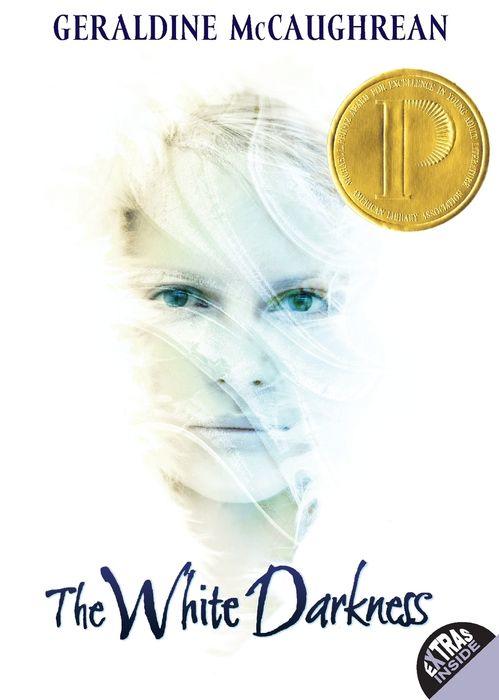
The White Darkness by Geraldine McCaughrean

Knowing what’s real and what’s an illusion—or even self-deception—is taken to another level in this stunning YA novel about a deaf teenager who’s taken to the South Pole by her troubled and domineering “uncle” who’s an obsessive believer in theories of a Hollow Earth. Sym is accompanied by an invisible companion: Captain Titus Oates, famed for his heroic “I may be some time” self-sacrifice in a bid to save the lives of his companions on Scott’s doomed 1912 expedition to the Pole. He’s unflappable, endearing and obtuse by turns, and this imaginary figure allows Sym to interrogate the boundaries of her own reality and free herself from the influences of fantasy and fantasists. A brilliant, inspiring read.
Read about the other entries on the list.

--Marshal Zeringue

Sunday, March 27, 2022

Eleven top books about prison

Daniel Genis was born in New York City and graduated from NYU with degrees in history and French. He has worked as a translator and has written for Newsweek, The Daily Beast, The Paris Review, The Washington Post, Vice, Deadspin, Süddeutsche Zeitung, The Guardian, and the New York Daily News.

His new memoir is Sentence: Ten Years and a Thousand Books in Prison.

At Publishers Weekly Genis shared a list of eleven "standout books about prison—which could easily have been twice as long—and you will have a good idea of the nature of incarceration." One title on the list:
Shantaram by Gregory David Roberts

A wonderfully interesting tale of crime and punishment in India. Prison in the subcontinent is rough; you’ll have little to complain about once you read about the general acceptance of transparent worms in all available water. The drug abuse that led the author to his fate is a good meditation on the dangers of that path, if all the other “usual suspects” aren’t enough.

Shantaram is 1,000 pages of “Locked up Abroad”; it will terrify you and then mortify you, finally leaving you very grateful for your comfortable cot in a First World facility. Men in N.Y. state prison wouldn’t eat bread that had fallen on the floor; in poorer nations you cannot even count on food without payment. This novel is colorful and exciting and autobiographical without being too much so.
Read about the other entries on the list.

--Marshal Zeringue

Saturday, March 26, 2022

Ten top alternate history thrillers

Josh Weiss is an author from South Jersey. Raised in a proud Jewish home, he was instilled with an appreciation for his cultural heritage from a very young age. Today, Weiss is utterly fascinated with the convergence of Judaism and popular culture in film, television, comics, literature, and other media. After college, he became a freelance entertainment journalist, writing stories for SYFY WIRE, The Hollywood Reporter, Forbes, and Marvel Entertainment. He currently resides in Philadelphia with his fiancée, as well as an extensive collection of graphic T-shirts, movie posters, vinyl records, and a few books, of course.

Weiss's new novel is Beat the Devils.

[Writers Read: Josh Weiss; My Book, The Movie: Beat the Devils; The Page 69 Test: Beat the Devils]

At CrimeReads he tagged his ten "all-time must-read alternate history thrillers set against the backdrop of authoritarian and/or dystopian worlds that might have been." One title on the list:
Fatherland, Robert Harris (1992)

Fatherland may just be my favorite entry on this list. It certainly was the biggest source of inspiration for Beat the Devils. Harris’s vision of a fully-realized Germania is a masterclass in alternate history storytelling and a profound exploration of the phrase “history is written by the victors.”

If so-called “Master Race” had won the Second World War, to what extent would they whitewash their industrialized extermination program of Europe’s Jewish population? It’s a chilling question to which Fatherland (a Twilight Zone reflection of Philip Kerr’s Bernie Gunther series) provides an equally chilling answer.

When the corpse of one Josef Bühler washes up on the shores of the Havel, homicide detective and disillusioned Aryan, Xavier March, starts to unravel an immense conspiracy that’s got nothing to do with police corruption or shady land deals. In other words, all the expected beats of a noir mystery don’t apply here. This dangerous cover-up aims much higher: someone wants to put a tight lid on the Holocaust. If the attendees of the infamous Wannsee Conference (the 1942 meeting that set the Final Solution in motion) aren’t safe, then no one is.
Read about the other entries on the list.

Fatherland is among Jay Rayner's six best books.

--Marshal Zeringue

Friday, March 25, 2022

Seven books about multiple timelines & blurred realities

Erin Kate Ryan is the author of Quantum Girl Theory.

Leaning against her basement wall are degrees from Boston University School of Law and the Bennington Writing Seminars.

Her fiction has been published in VQR, Glimmer Train, The Normal School, and elsewhere. She is a James Jones First Novel Fellow and a McKnight Artist Fellow. She holds an MFA in fiction from the Bennington Writing Seminars, where she was an Alumni Fellow. She lives in the Hudson Valley with her partner and found family.

At Electric Lit Ryan tagged seven novels that "explore [the] idea of multi-layered reality, of the expanded moment, in radically different ways." One title on the list:
Long Division by Kiese Laymon

In everything Kiese Laymon writes, I think, he’s doing careful work with time and language. He makes repetition into a tool for language and idea formation; he forges revision into a mechanism for liberation. In this novel, characters are doubled, troubles and traumas are doubled, and the ability to visit (and change) the past makes every prior event present and future, as well. In Long Division, no moment has ever passed—it is always ripe for revisiting, revising, expanding, rewriting into a fuller, freer existence.
Read about the other entries on the list.

--Marshal Zeringue

Thursday, March 24, 2022

Top 10 mirrored lives in fiction

Alex Hyde is a lecturer at University College London.

Violets, her first novel, is a fictional reimagining of her father’s story, drawing on family mythology and his personal archives. She lives with her family in South London.

At the Guardian Hyde tagged ten top fictional mirrored lives, including:
The God of Small Things by Arundhati Roy

Twins are an irresistible vehicle for mirrored lives, embodying sameness and difference at once. Rahel and Estha, the “two-egg twins” at the centre of Roy’s family drama, are separated by the cruelties of social systems. Flipping back and forth between the tragic events that shape the twins’ childhoods and their reunion as adults, their bond becomes the culmination of all the bonds broken before.
Read about the other entries on the list.

The God of Small Things is among Saumya Roy's seven unlikely love stories in literature and Miranda Doyle's top ten books about lies.

--Marshal Zeringue