Friday, January 6, 2023

Four top novels with nuanced portrayals of sex workers

Adele Parks is the #1 Sunday Times bestselling author of twenty novels, including Lies Lies Lies and Just My Luck, as well as I Invited Her. Just My Luck is currently in development to be made into a movie.

[The Page 69 Test: I Invited Her In; My Book, The Movie: I Invited Her In; Q&A with Adele Parks; The Page 69 Test: Lies, Lies, Lies; My Book, The Movie: Lies, Lies, Lies; My Book, The Movie: Just My Luck]

Parks's new novel is One Last Secret.

At CrimeReads Parks tagged "some of the best fictional portrayals of sex workers, and asks why the media so often relies on stereotype." One novel on her list:
The Less Dead by Denise Mina

Glasgow-based physician Margot Dunlop is trying to make sense of her world, and so reaches out to the agency that facilitated her adoption to get in touch with her birth mother, only to learn that she was a sex worker murdered shortly after Margot’s birth. Margot isn’t sure she wants to be involved in this dark underbelly of her roots, but she isn’t given a choice when the killer begins stalking and harassing her as well.
Read about the other books Parks tagged at CrimeReads.

--Marshal Zeringue
Thursday, January 5, 2023

Top ten novels & stories about prophets

Aidan Cottrell-Boyce was born in Liverpool in 1987. He completed his PhD at the Divinity Faculty of the University of Cambridge in 2018. During his doctoral studies he ran as a Parliamentary candidate for the Green Party. He is the author of two academic books: Jewish Christians in Puritan England (2020) and Israelism in Modern Britain (2021).

Cottrell-Boyce's debut novel is The End of Nightwork.

At the Guardian the author tagged ten favorite novels and stories about prophets, including:
Elijah in Moby-Dick by Herman Melville

Elijah only appears quite briefly, on the dock in Nantucket as Ishmael and Queequeg are about to board the Pequod. When they tell Elijah they are carrying articles to join the crew, he asks if there is “anything down there about your souls?” At the toughest moments in the voyage, poor old Ishmael goes back and back to Elijah’s gnomic caution. “The ragged Elijah’s diabolical incoherences are uninvitedly recurring to me,” he says. Like all great prophecies, Elijah’s warning about the future seems to shape that future.
Read about the other entries on the list.

Moby-Dick appears among James Stavridis's five best books to know the sea, Robert McCrum's top ten Shakespearean books, Bridget Collins's top ten Quakers in fiction, John Boyne's six best books, Kate Christensen's best food scenes in fiction, Emily Temple's ten literary classics we're supposed to like...but don't, Sara Flannery Murphy ten top stories of obsession, Harold Bloom's six favorite books that helped shape "the American Sublime,"  Charlotte Seager's five well-known literary monomaniacs who take things too far, Ann Leary's top ten books set in New England, Martin Seay's ten best long books, Ian McGuire's ten best adventure novels, Jeff Somers's five top books that will expand your vocabulary and entertain, Four books that changed Mary Norris, Tim Dee's ten best nature books, the Telegraph's fifteen best North American novels of all time, Nicole Hill's top ten best names in literature to give your dog, Horatio Clare's five favorite maritime novels, the Telegraph's ten great meals in literature, Brenda Wineapple's six favorite books, Scott Greenstone's top seven allegorical novels, Paul Wilson's top ten books about disability, Lynn Shepherd's ten top fictional drownings, Peter Murphy's top ten literary preachers, Penn Jillette's six favorite books, Peter F. Stevens's top ten nautical books, Katharine Quarmby's top ten disability stories, Jonathan Evison's six favorite books, Bella Bathurst's top 10 books on the sea, John Mullan's lists of ten of the best nightmares in literature and ten of the best tattoos in literature, Susan Cheever's five best books about obsession, Christopher Buckley's best books, Jane Yolen's five most important books, Chris Dodd's best books, Augusten Burroughs' five most important books, Norman Mailer's top ten works of literature, David Wroblewski's five most important books, Russell Banks' five most important books, and Philip Hoare's top ten books about whales.

--Marshal Zeringue

Wednesday, January 4, 2023

The 10 best 21st-century Chicago nonfiction books

Edward McClelland is a native of Lansing, Mich., which is also the birthplace of Burt Reynolds and the Oldsmobile.

McClelland’s most recent book, Midnight in Vehicle City: General Motors, Flint, and the Strike That Built the Middle Class, is a narrative account of the 1936-37 Flint Sit Down Strike, which led to the establishment of the United Auto Workers as the nation’s flagship labor union. His previous book, How to Speak Midwestern, is a guide to the speech and sayings of Middle America, which The New York Times called “a dictionary wrapped in some serious dialectology inside a gift book trailing a serious whiff of Relevance.”

At Chicago magazine McClelland tagged ten of Chicago’s best non-fiction books of the 21st Century including:
Heat Wave: A Social Autopsy of Disaster in Chicago by Eric Klinenberg (2002)

In July of 1995, the temperature in Chicago reached 106 degrees. More than 700 people died, many of them isolated senior citizens who suffocated alone in tiny apartments. Klinenberg, a sociologist at New York University and a Chicago native, conducted what he called a “social autopsy” of the disaster. Not surprisingly, he found the causes were rooted in the eternal Chicago ills of racism, segregation, inequality and disinvestment. Those problems will always be with Chicago, but new ordinances requiring A/C units in apartments have prevented more mass heat deaths, even as summers have gotten warmer.
Read about the other entries on the list.

--Marshal Zeringue

Tuesday, January 3, 2023

Nine titles featuring female villains who lean into their wickedness

Rebecca Kelley is an author and graphic designer whose first novel, Broken Homes and Gardens, was published in 2015.

Her second novel, No One Knows Us Here, is out this month from Lake Union Publishing.

"There is a point in my novel No One Knows Us Here when my heroine does a very, very bad thing, Kelley writes. "She doesn’t have to do the bad thing—it’s not one of those 'steal a loaf of bread to feed her starving family' situations. She has other options and chooses to go down the dark path anyway."

At Electric Lit Kelley tagged nine "stories about bad women who chose to go down a dark and devious path," including:
White Ivy by Susie Yang

As a child growing up in Boston, Ivy Lin’s immigrant grandmother teaches her the art of thievery, a talent she carries into adulthood, when she finds herself drawn into the world of a WASPy rich family. She then goes to extreme lengths to secure her new position there. White Ivy reminds me of other great books: Donna Tartt’s The Secret History for its commentary on social class and also White Oleander, Janet Fitch’s 1999 hit that also happens to feature an excellent female villain. At the same time, White Ivy offers a completely different take on the immigrant experience and introduces a memorable villainess who never disappoints the reader by doing the right “bad” thing.
Read about the other entries on the list.

--Marshal Zeringue
Monday, January 2, 2023

Five of the best novels featuring gods

Hannah Kaner is a Northumbrian writer living in Scotland. She works as a senior digital consultant in Edinburgh, delivering digital healthcare, tools, and services for the public sector. She has a first class degree in English from Pembroke College, Cambridge, and a Masters of Science with distinction from the University of Edinburgh. She is inspired by world mythologies, angry women, speculative fiction, and the stories we tell ourselves about being human.

Kaner's new novel is Godkiller.

At the Waterstones blog she tagged five favorite novels featuring gods, including:
Circe by Madeleine Miller

Circe is where we go full god. I inhaled Greek myths as a child, and studied Greek tragedies as a student, so developed a deep love of the capricious, silly, self-centred, cruel and potent gods that inspire Miller’s retelling.

Circe is a demigod beloved of neither gods nor humans. In the myths I read as a child she was antagonist, but in Miller’s tale she is a woman against a brutal world and a cruel pantheon. Through creativity and cunning, she makes a life in almost isolation that still intersects with a new perspective on Greek legends.
Read about the other entries on the list.

Circe is among the B&N Reads editors' twenty-four best mythological retellings, Ashleigh Bell Pedersen's eight novels of wonder and darkness by women writers, Kelly Barnhill's eight books about women's rage, Sascha Rothchild's most captivating literary antiheroes, Rachel Kapelke-Dale's eleven top unexpected thrillers about female rage, Kat Sarfas's thirteen enchanted reads for spooky season, Fire Lyte's nine current classics in magic and covens and spells, Elodie Harper's six top novels set in the ancient world, Kiran Millwood Hargrave's seven best books about islands, Zen Cho's six SFF titles about gods and pantheons, Jennifer Saint's ten top books inspired by Greek myth, Adrienne Westenfeld's fifteen feminist books that will inspire, enrage, & educate you, Ali Benjamin's top ten classic stories retold, Lucile Scott's eight books about hexing the patriarchy, E. Foley and B. Coates's top ten goddesses in fiction, Jordan Ifueko's five fantasy titles driven by traumatic family bonds, Eleanor Porter's top ten books about witch-hunts, Emily B. Martin's six stunning fantasies for nature lovers, Allison Pataki's top six books that feature strong female voices, Pam Grossman's thirteen stories about strong women with magical powers, Kris Waldherr's nine top books inspired by mythology, Katharine Duckett's eight novels that reexamine literature from the margins, and Steph Posts's thirteen top novels set in the world of myth.

--Marshal Zeringue

Sunday, January 1, 2023

The 10 best fictional hangovers

For the Guardian Euan Ferguson named the ten best fictional hangovers in print, film and song. One title on the list:
Lucky Jim by Kingsley Amis

The best hangover scene ever written, from a master of both writing and hangovers. “[Jim] Dixon was alive again. Consciousness was upon him before he could get out of the way… He lay sprawled, too wicked to move, spewed up like a broken spider-crab on the tarry shingle of the morning… His mouth had been used as a latrine by some small creature of the night, and then as its mausoleum. During the night, too, he’d somehow been on a cross-country run and then been expertly beaten up by secret police. He felt bad”
Read about the other entries on the list.

Lucky Jim also appears on a list of four books that changed David Free, John Cleese's six favorite books list, Christian Rudder's six favorite books list, Jess Dukes's top ten list of brain-expanding books for the college-bound teen, Andy Borowitz's list of five top comic novels, Sean O'Hagan's list of the ten best fictional hangovers, Roger Rosenblatt's list of the five best satires of academic life, and John Mullan's lists of ten of the best lectures in literature, ten of the best professors in literature, and ten of the best beards in literature.

--Marshal Zeringue

Saturday, December 31, 2022

Eight fantasy tales about the joys of bread and baking

Lindsay Eagar was born and raised just outside of Salt Lake City, Utah. She lives surrounded by mountains with her husband and two wild daughters. She loves sharks, coffee, flannel, winter, roller-blading, baking, running, playing the piano, non-fiction about jungle exploration, and making up stories.

Her debut, Hour of the Bees, came out from Candlewick Press to critical acclaim, and her follow-up, Race to the Bottom of the Sea, was named by Booklist as one of the “50 best middle grade books of the century.” Her most recent work is The Patron Thief of Bread.

At Tor.com Eagar tagged eight fantasy tales about the joys of bread and baking, including:
Gingerbread by Helen Oyeyemi
For spite

Gingerbread is a fairy tale, but it’s a fairy tale through a splintered magnifying glass. Helen Oyeyemi’s work is always challenging, always striking, and always magical, and this is no exception. Telling the story of Perdita Lee, who lives with her mother in London, and theirs is a strange existence. Their house is warped and full of interesting wallpapers and stairways and dolls, and at the center of the novel is a family recipe for gingerbread that derives from the fictional country of Druhastrana.

This is not comfort food. This gingerbread is not a happy Christmastime treat, it is used as a bribe, a poison, a gift, a threat, a celebration, an heirloom. Eating this gingerbread is like a revenge, says Oyeyemi. And yet it sounds delicious all the same.
Read about the other entries on the list.

--Marshal Zeringue

Friday, December 30, 2022

Seven titles that celebrate underappreciated crafts

Aanchal Malhotra is a writer and oral historian from New Delhi, India. A co-founder of the Museum of Material Memory, Malhotra has written two nonfiction books on the human history and generational impact of the 1947 Partition, titled Remnants of Partition and In the Language of Remembering.

The Book of Everlasting Things is her debut novel.

At Electric Lit Malhotra tagged seven books "centering the ancient traditions and unique occupations endangered by a modernizing world," including:
Jadoowallahs, Jugglers and Jinns: A Magical History of India by John Zubrzycki [US title: Empire of Enchantment: The Story of Indian Magic]

One of my early childhood memories in India is of the magicians, puppeteers, and snake-charmers that attended our birthday parties. There are photographs of them making eggs appear and disappear in our hands, pulling doves from top hats, finding coins behind a cousin’s ear. India’s association with magic goes back centuries, and in this magnificent book, Australian writer, John Zubrzycki explores how “magic descended from the domain of the gods to become part of daily ritual and popular entertainment.” Highly imaginative and rich in detail, the book draws on archival records, newspaper articles, interviews, and memoirs of Western and Indian magicians and illusionists to culminate in an extraordinary cultural history of oddities.
Read about the other entries on the list.

The Page 99 Test: Empire of Enchantment.

--Marshal Zeringue

Thursday, December 29, 2022

Top 10 books about the Iron Curtain

Timothy Phillips is the author of The Secret Twenties: British Intelligence, the Russians, and the Jazz Age (2017) and Beslan: The Tragedy of School No. 1 (2008). He grew up in Northern Ireland and now lives in London. He holds a doctorate in Russian from Oxford University and has written and spoken widely on British and Russian history.

Phillips's new book is The Curtain and the Wall: A Modern Journey along Europe’s Cold War Border [US title: Retracing the Iron Curtain: A 3,000-Mile Journey Through the End and Afterlife of the Cold War].

At the Guardian he tagged ten "books that reveal the essence of the most menacing border the world has yet seen," including:
Blood and Sand: Suez, Hungary and the Crisis That Shook the World by Alex von Tunzelmann

This rare gem focuses on two of the biggest events of the period, the Suez crisis and the Hungarian Revolution. Both reached their culmination at the same time in 1956. More often treated separately, in Von Tunzelmann’s hands the twin crises regain their full geopolitical force. She has an eye for illuminating detail; the action often unfolds hour by hour. It reads like a thriller.
Read about the other entries on the list.

--Marshal Zeringue

Wednesday, December 28, 2022

Five top novels with dual timelines

Liv Andersson is an author, lawyer, and former therapist whose background has inspired her thrillers and mysteries. She and her husband live in the beautiful Green Mountains of Vermont with their sons and three dogs.

Her new novel is Little Red House.

[The Page 69 Test: Little Red House]

At CrimeReads Andersson tagged five favorite novels with dual timelines, including:
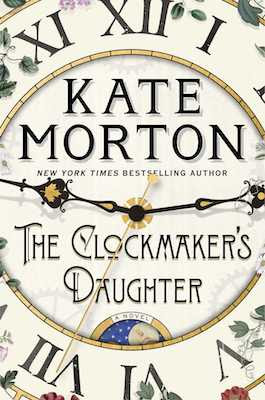
The Clockmaker’s Daughter by Kate Morton

In Morton’s riveting, multilayered novel, a group of Nineteenth Century artists and a young woman born more than a century later have something in common—Birchwood Manor. In the summer of 1862, a group of artists, led by artistic visionary Edward Radcliffe, visits Birchwood Manor on the banks of England’s Upper Thames. The young artists are determined to spend the summer in a creative bliss. Things don’t turn out as planned, however, and by the end of their time at Birchwood Manor, Radcliffe’s fiancée has been killed and another woman has disappeared. One hundred and fifty years later, Elodie Winslow, a young London archivist, makes a surprising find that entwines her own story with the suspicious events that happened all those years ago near Birchwood Manor.
Read about the other entries on the list.

--Marshal Zeringue

Tuesday, December 27, 2022

Five books to read for when you’re lonely

Claire Alexander lives on the west coast of Scotland with her husband and children. She has written for The Washington Post, The Independent, The Huffington Post, and Glamour. In 2019, one of her essays was published in the award-winning literary anthology We Got This: Solo Mom Stories of Grit, Heart, and Humor.

When she’s not writing or parenting, Alexander is on her paddle board, thinking about her next book.

Her latest book is Meredith, Alone.

At Lit Hub Alexander tagged five books that have given her "comfort during periods of disconnection or retreat," including:
Lessons in Chemistry by Bonnie Garmus

Single mother and research scientist Elizabeth Zott definitely isn’t your average 1960s woman. She refuses to be held back by her misogynistic male counterparts and in the absence of a supportive family, assembles her own out of a group of equally quirky, intriguing characters.
Read about the other entries on the list.

--Marshal Zeringue

Monday, December 26, 2022

Five books where assuming aliens are just like you might get you killed

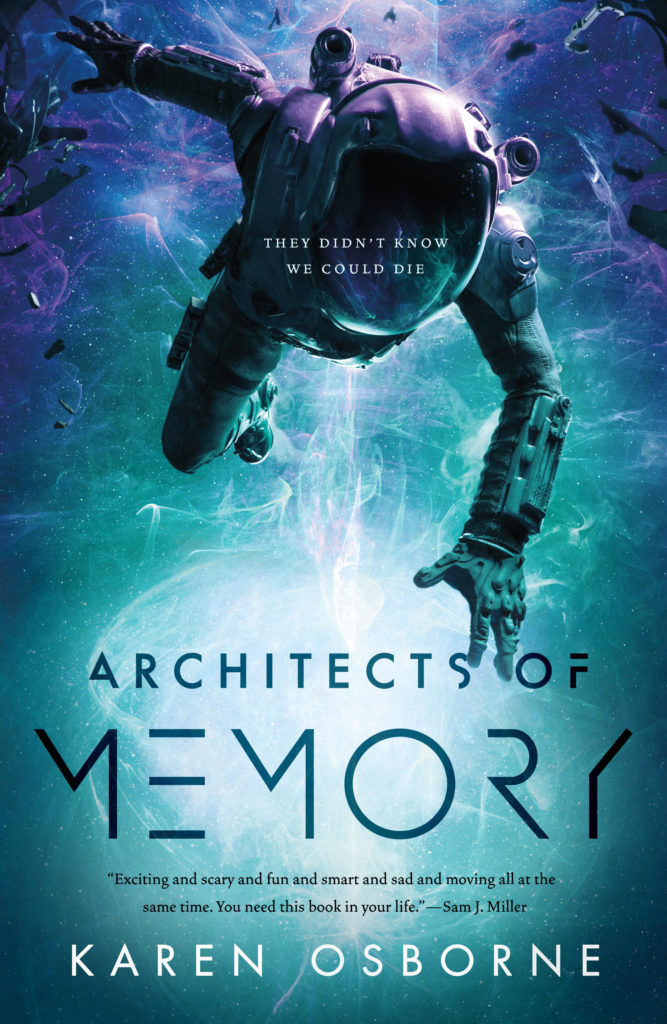
Karen Osborne is the author of Architects of Memory and Engines of Oblivion from Tor Books. Her short fiction appears in Uncanny, Clarkesworld, Fireside, Escape Pod, Robot Dinosaurs, and Beneath Ceaseless Skies. She is a member of the DC/MD-based Homespun Ceilidh Band, emcees the Charm City Spec reading series, and once won a major event filmmaking award for taping a Klingon wedding.

Osborne lives in Baltimore, MD, with two violins, an autoharp, five cameras, two cats and a family.

At the Tor.com she tagged five books where assuming aliens are just like you might get you killed, including:
Leviathan Wakes by James S.A. Corey

Corporations in science fiction aren’t always evil—but they’re usually out to ruin everyone’s day by assuming this, that, and the other thing, and that’s certainly the case with Leviathan Wakes and its sequels. This time, the Mao-Kwikowski Corporation has uncovered an alien substance known as the protomolecule, and they’re attempting to use it to do what corporations generally want to do: increase their profits. The crew of the Rocinante,
captained by idealist James Holden, stumbles upon the conspiracy, which eventually leads to a domino-fall of lies, cover-ups, and all-out war.

Corey’s corporates cause so much trouble because they assume they can control the alien substance—but, throughout, the protomolecule is dispassionate and efficient and largely uncontrollable. The result of human refusal to even try to understand it is death by blindness, death by spaghettification, death by being turned into a blue glowy murder monster or smashed into a thin red goo—you get the picture. Assumptions lead to every single death.

Holden is part of the minority that realize that a healthy scientific respect of the alien devices is the only advantage the humans have in their dealings with the protomolecule. Leviathan Wakes is what happens when you can’t talk to the aliens at all, because they’ve sauntered off and left their toys behind for humans with their many and manifold conflicts to puzzle out and assume (#4? #5? #2827372?) the aliens’ original intentions.

That ends about as well as you’d imagine.
Read about the other entries on the list.

The Expanse series is among Charlie Jane Anders's five fantastic books about colonizing other planets.

--Marshal Zeringue