Saturday, September 10, 2016

Five top 9/11 novels

At The Daily Beast, Jimmy So named five novels that deal with 9/11 in significant if oblique ways, including:
Netherland by Joseph O’Neill

Netherland is a gaunt novel that begins with a Dutch banker, named Hans van den Broek, who fled his Tribeca loft and lived with his family in the Chelsea Hotel after the World Trade Center fell. O’Neill’s prose is precise and whisperingly rich throughout, and offers perhaps the best sensory report on New York in the days after 9/11: “Around the clock, ambulances sped eastward on West Twenty-third Street with a sobbing escort of police motorcycles,” Hans observes. “Sometimes I confused the cries of the sirens with my son’s nighttime cries.” The attacks puts him in a kind of paralysis, and his wife leaves him for London, freeing him to turn to a game that, although you wouldn’t likely think of it that way, O’Neill somehow makes into a symbol of the American dream: cricket. The book is lovingly careful with its symbolism, so when Hans experiences his rebirth from sluggishness and embraces the vibrant sport, which has a healthy subculture among West Indian immigrants in the city’s ungroomed public parks, the emotional sonority fits, taking us on Hans’s redemptive arc without being overwrought.
Read about the other entries on the list.

Netherland is among Richard Tomlinson's top ten cricket scenes in fiction and Brooke Hauser's six favorite books about immigrants.

--Marshal Zeringue

Five sci-fi novels that satirize society as we know it

Luke Rhinehart's new book is Invasion. One of his five favorite sci-fi satires, as shared at Tor.com:
Player Piano by Kurt Vonnegut

Much of Vonnegut’s work, both sci-fi and other, is a satirical attack on man’s tendency to take everything seriously, a theme of my work also. But the novel that makes the most clear and focused satirical attack on the established society or its tendencies as projected into the future is Player Piano. It makes an almost Luddite criticism of the way capitalism and technology seem to be developing. In the novel, Vonnegut imagines a world dominated by a supercomputer and run by a “one-percent” of engineers who live a life of isolated luxury, in contrast to the sad powerless lives of the masses. Machines have eliminated all but a few technical jobs, and the dominant class does nothing to alleviate the misery of the majority. Vonnegut even foresees that electing an unintelligent president is irrelevant since the real power lies with the rich engineering elite. The book seems more pertinent today than ever, since the unemployment, inequalities, and vast chasm between the super-rich and most others that Vonnegut anticipated are now becoming even more rampant.
Read about the other entries on the list.

--Marshal Zeringue

Friday, September 9, 2016

Five top feel-good short story collections

At B&N Reads Jenny Shank tagged five short story collections that will leave you with a smile on your face, including:
Nine Inches, by Tom Perrotta

Tom Perrotta’s stories qualify as feel-good tales because their scenarios will be familiar to anyone who has lived, worked, or raised children in a suburb or small town, and their denouements often serve as wish fulfillment for the reader. Ever been annoyed by a fellow parent at a Little League game? Well, the characters in “The Smile on Happy Chang’s Face” lose their cool so you don’t have to. Many stories have funny scenarios that sound like they could have happened down the street, yesterday—like “Nine Inches,” in which teachers serving as chaperones at a junior high dance must keep their charges that far apart because the last dance devolved into a “a drunken brawl/gropefest,” forever immortalized on YouTube.
Read about the other entries on the list.

--Marshal Zeringue

Thursday, September 8, 2016

Top ten dodgy lawyers in literature

Alex Wade is a writer, freelance journalist, media lawyer and lecturer. His newest book is Flack's Last Shift. One of the author's ten top dodgy lawyers in literature, as shared at the Guardian:
Sandor Himmelstein in Herzog by Saul Bellow

Here’s another tricky customer. Sandor Himmelstein is the lawyer to Moses E Herzog, Bellow’s eponymous protagonist. Herzog is going through a divorce, but staying with Himmelstein doesn’t do him any favours. He’s bullied by the lawyer, who despises Herzog’s emotional response to the world and merrily declares of his profession: “We’re all whores.” There are various morals in Herzog; one might be to never, ever stay with your lawyer.
Read about the other entries on the list.

Herzog also appears on Zachary Leader's list of Bellow's five must-read novels, Eli Gottlieb's list of the top 10 literary scenes from the battle of the sexes, John Mullan's lists of ten of the best taxis in literature and ten of the best bad lawyers in literature, and Rebecca Goldstein's list of the five best novels of ideas.

--Marshal Zeringue

Wednesday, September 7, 2016

Ten of the strangest novels set in Florida

Jeff Somers is the author of the Avery Cates series, The Ustari Cycle, Lifers, and Chum (among many other books) and numerous short stories.

At the B&N Reads blog he tagged the ten strangest novels set in Florida, including:
Razor Girl, by Carl Hiaasen

Hiaasen is the Jester King of Florida novels. He has unleashed a demented string of stories as hilarious as their characters are downright strange. Razor Girl is one of the most anticipated novels of the year for good reason: namely, its characters. The rogues gallery is impressive, from Razor Girl herself, who subsists off of automobile crash scams; to con artist Trebeaux, continuously moving sand from one eroded beach to another; to the Wisconsin accordion player pretending to be a Florida redneck for a reality TV show; and an attorney addicted to—and being disfigured by—an erectile dysfunction medicine he’s litigating against. And that isn’t even the half of it, as once again, Hiaasen effortlessly captures the weirdness of the most magical place on Earth.
Read about the other entries on the list.

--Marshal Zeringue

Tuesday, September 6, 2016

Five YA novels featuring fantastic liars

Darren Croucher writes YA novels with a partner, under the name A.D. Croucher. At the BN Teen blog he tagged five YA novels featuring seven of his favorite liars, including:
Cady: We Were Liars, by E. Lockhart

This is a tough one to talk about. Spoilers, you see. All I’ll say about this is that Cady’s recovering from a head injury and suffers from terrible migraines and memory loss, so her recollections of what really happened two summers ago is not completely reliable. But when you read this book, you’ll understand why—in some ways—Cady might just be the Katie Ledecky in the 800m freestyle of lying. This is a fantastically twisty, page-turn-y thriller. Go read it.
Read about the other entries on the list.

We Were Liars is among Michael Waters's six must-read YA books for Mr. Robot fans, Lindsey Lewis Smithson's top seven sob-inducing books that deserve to be made into movies, Ruth Ware's top ten psychological thrillers, and Meredith Moore's five favorite YA thrillers.

Also see: Nick Lake's top ten liars in fiction and Dan Ariely's six top books about, or by, liars.

--Marshal Zeringue

Monday, September 5, 2016

Graham Moore's six favorite books about technology

Graham Moore's new novel is The Last Days of Night. One of his six favorite books about technology, as shared at The Week magazine:
Pattern Recognition by William Gibson

In his 2003 masterpiece, Gibson directed his microscopically precise prose at the present day. He describes the everyday experiences of this moment — jet lag, email, online chat rooms, global branding campaigns — as if they were from the far future, revealing the unique strangeness of the era we live in.
Read about the other entries on the list.

Pattern Recognition is among Damien Walter's five science fiction novels for people who hate SF and David Ulin's five essential 9/11 books.

Learn about why Gibson decided to set Pattern Recognition in the present, unlike his previous novels.

--Marshal Zeringue

Sunday, September 4, 2016

Ten of the best sci-fi & fantasy schools

At the B&N Sci-Fi & Fantasy Blog, Meghan Ball tagged ten top fictional educational institutions from SFF books, including:
The University (The Kingkiller Chronicles, by Patrick Rothfuss)

A school so old and important it doesn’t even need a name, the University, located just across the Omethi River near Imre, is truly the place to go if you want to master sympathetic magic. Hiding a multitude of secrets in its exclusive archives (whatever you do, don’t try to bring a lantern into the stacks), and with a staff of nine professors, each with their own quirks, its a great place to learn, provided you have the talents (and the marks) to swing the tuition. Kvothe’s trials and tribulations at the University comprise a hefty chunk of Patrick Rothfuss’ addictive (and still maddeningly incomplete) fantasy trilogy—perhaps it should have been called the University of Hard Knocks.
Read about the other entries on the list.

The Name of the Wind (Kingkiller Chronicles Series #1) is among Arwen Elys Dayton's five top books about false identities.

My Book, The Movie: The Name of the Wind.

--Marshal Zeringue

Saturday, September 3, 2016

Six of the best books about university life

Michelle Dean is a critic and journalist based in New York. One of her six best books about university life, as shared at the Guardian:
The Marriage Plot by Jeffrey Eugenides

When the first excerpt from this novel ran in the New Yorker in 2010, it was the sort of thing that every bookish person in New York went around asking each other: “Did you read this yet?” Come for Eugenides’s deconstruction of the traditional romantic plot that ends with a wedding; stay for the way Madeleine and her suitor talk about their mutual obsession with the theories of Roland Barthes.
Read about the other entries on the list.

--Marshal Zeringue

Friday, September 2, 2016

Seven top works of Afrofuturism

Ardi Alspach is a writer, editor, designer, and teacher. One of her seven top works of Afrofuturism, as shared at the B&N Sci-Fi & Fantasy Blog:
The Intuitionist, by Colson Whitehead

The Intuitionist is a unique novel about integration and racial progress in a world of elevators and their inspectors. The inspectors are divided between Empiricist and Intuitionists. Protagonist Lila Mae Watson becomes the second black inspector—and the first black female black—in the Elevator Guild. When she finds herself in trouble with the powers that be, she uses her wit and research skills to untangle herself, in the process stumbling upon lost technology that could deliver her society into a new future. While this novel skews more toward the literary than the genre elements of Afrofuturism, it remains an important work that comments on racism and societal reform in a science fictional universe.
Read about the other entries on the list.

--Marshal Zeringue

Six top unrequited loves in literary history

Jeff Somers is the author of the Avery Cates series, The Ustari Cycle, Lifers, and Chum (among many other books) and numerous short stories.

At the B&N Reads blog he tagged the top six unrequited loves in literary history, including:
Jane Austen and Tom Lefroy

No one can prove that Jane Austen was hopelessly in love with Tom Lefroy, or that Lefroy was the inspiration for Mr. Darcy, or anything beyond the documented facts that Austen and Lefroy flirted a bit and had some sort of go-nowhere relationship. The circumstantial evidence is powerful, however: Austen wrote three novels in a furiously passionate period immediately following her time with Lefroy, hinting at some sort of powerful emotional event—like, say, the man you’d fallen in love with leaving you to pursue (an admittedly brilliant) legal career.
Read about the other entries on the list.

Also see John Mullan's ten best examples of unrequited love in literature.

--Marshal Zeringue

Thursday, September 1, 2016

Top ten books featuring parks

Travis Elborough's most recent book is A Walk in the Park: The Life and Times of a People’s Institution. One of his ten best books featuring parks, as shared at the Guardian:
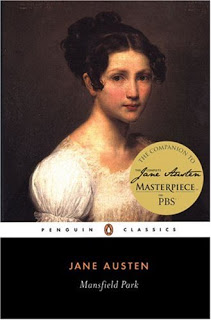
Mansfield Park, by Jane Austen (1814)

Jane Austen lived in the period when wealthy landowners were smitten by schemes to remodel their great country estates along the quasi-pastoral lines promoted by such giants of landscape architecture as Lancelot “Capability” Brown and Humphry Repton. Repton’s name appears no less than five times in Mansfield Park. The hows, whys, wherefores and difficulties of “improving” estate parkland crop up in several of Austen’s novels – Pemberley in Pride and Prejudice is, for example, commended for the understated nature of its new garden work – but perhaps receives their most thorough dissection in the exchanges between Fanny Price and Mr Rushworth in chapter six of this book. Elsewhere in the novel, Price wisely maintains that “to sit in the shade on a fine day, and look upon verdure is the most perfect refreshment”.
Read about the other entries on the list.

Maria Bertram in Mansfield Park is among Melissa Albert's five fictional characters who deserved better than they got.

--Marshal Zeringue