Friday, November 12, 2010

Twelve great stories to help you to cope with mortality

At io9, Charlie Jane Anders and Michael Ann Dobbs came up with a list of science fiction and fantasy stories that can help you deal with death.

One title on the list:
Slaughterhouse Five by Kurt Vonnegut

The book that gave us all the stoic, and somehow soothing, mantra "So it goes" also provides this wonderful, alien, way of looking at death:
The most important thing I learned on Tralfamadore was that when a person dies he only appears to die. He is still very much alive in the past, so it is very silly for people to cry at his funeral. All moments, past, present and future, always have existed, always will exist. The Tralfamadorians can look at all the different moments just that way we can look at a stretch of the Rocky Mountains, for instance. They can see how permanent all the moments are, and they can look at any moment that interests them. It is just an illusion we have here on Earth that one moment follows another one, like beads on a string, and that once a moment is gone it is gone forever.

When a Tralfamadorian sees a corpse, all he thinks is that the dead person is in bad condition in the particular moment, but that the same person is just fine in plenty of other moments.
Perhaps the most amazing thing about this book is that this calm view of death is coupled with a fervent anti-war message.
Read about the other books on the list.

Slaughterhouse-5 also made Sebastian Beaumont's top 10 list of books about psychological journeys and Tiffany Murray's top ten list of black comedies.

--Marshal Zeringue

Thursday, November 11, 2010

Top ten novels set in Moscow

A linguist and an international negotiator, Ann Shevchenko speaks seven languages and is the author of two books on cross-cultural communication.

Her debut novel is Bequest.

For the Guardian, she named her top ten novels set in Moscow. One novel on the list:
War and Peace by Leo Tolstoy (Moscow from 1810-1813)

The city of glamour and gambling, of superstition and appearances, relationships and glitzy balls.

"Moscow is about gossip, St Petersburg is about politics," says one of the characters.

It contrasts with the abandoned and burned city of 1813, Moscow after the Napoleonic invasion: the city of lost hopes, lost loves and lives.
Read about the other books on Shevchenko's list.

War and Peace also appears among Karl Marlantes' top ten war stories, Niall Ferguson's five most important books, Norman Mailer's top ten works of literature, and John Mullan's list of ten of the best floggings in fiction.

--Marshal Zeringue

Wednesday, November 10, 2010

Ten of the best zoos in literature

At the Guardian, John Mullan named ten of the best zoos in literature.

One novel on the list:
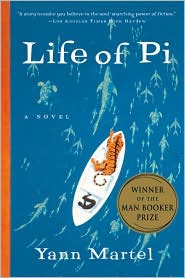
Life of Pi by Yann Martel

Martel's narrator grew up observing closely the behaviour of animals in the zoo his parents ran in India. "Under such conditions of diplomatic peace, all animals are content and we can relax and have a look at each other." His observation of animal cohabitation becomes useful when he finds himself sharing a lifeboat with a Bengal tiger.
Read about the other books on Mullan's list.

Life of Pi is one of Sara Gruen's six favorite books.

--Marshal Zeringue

Tuesday, November 9, 2010

Dennis Lehane's five favorite short story collections

Dennis Lehane was born and raised in Dorchester, Massachusetts. His novels include A Drink Before the War; Darkness, Take My Hand; Sacred; Gone, Baby, Gone; Prayers for Rain; Mystic River; Shutter Island; The Given Day; and the newly released Moonlight Mile.

Mystic River was a finalist for the PEN/Winship Award, and it won both the Anthony Award and the Barry Award for Best Novel as well as the Massachusetts Book Award in Fiction given by the Massachusetts Center for the Book.

Before becoming a full-time writer, Lehane worked as a counselor with mentally handicapped and abused children, waited tables, parked cars, drove limos, worked in bookstores, and loaded tractor-trailers. His one regret is that no one ever gave him a chance to tend bar. He lives in the Boston, Massachusetts, area.

One title from his list of five favorite short story collections, as told to The Daily Beast:
What We Talk About When We Talk About Love by Raymond Carver

What We Talk About When We Talk About Love introduced me to the modern short story. The first story “Why Don’t You Dance?” might be the densest “minimalist” story ever written, a seven-page masterpiece about a brokenhearted guy who puts all of his household possessions out on his front lawn, and a young couple wanders by and thinks it’s a yard sale. And it just gets better from there, story by story, building to the savage grace of the title story. In terms of short fiction in America, this book was an inarguable game changer.
Read about the other books on Lehane's list.

What We Talk About When We Talk About Love appears on Ward Just's list of six books with an “autumnal” quality.

Read about Dennis Lehane's five most important books.

--Marshal Zeringue

Monday, November 8, 2010

Five best books on Britain's Secret Service

Keith Jeffery is a professor of British history at Queen’s University, Belfast, and has written or edited thirteen books. His new book is The Secret History of MI6, the authorized history of the world's oldest and most storied foreign intelligence service, drawing extensively on hitherto secret documents.

At FiveBooks, he spokes with Daisy Banks about five books on MI-6, Britain's Secret Service. From their discussion of one book on the list:
From Russia With Love by Ian Fleming

There are so many James Bond books to choose from – what made you go for From Russia with Love?

The James Bond books represent the other end of the spectrum. These are cartoon characters in a way, but they produced the most famous single fictional spy who worked for MI6. Bond is very important. It is also quite difficult to extract the novels from the movies because we sort of visualise them. But From Russia with Love is on my list for two reasons. The first is it is the only one with an Irish angle and I am always looking for the Irish angle. And the second is there is a clear connection to Fleming’s work as an intelligence officer in the Second World War.

The Irish angle is Donovan or ‘Red’ Grant, a Smersh killer, who in the movie is a blond powerful figure who goes round killing people at the drop of a hat, which of course is one of those myths about the Secret Service that people are always killing each other just like that, and that everyone has a ‘licence to kill’…

According to the book, Grant, this Russian killer, is the son of an Irish mother and a German circus strongman. Now, in fact, a circus strongman really did exist. In April 1940 a German agent called Ernest Weber-Drohl landed in Southern Ireland, which was neutral during the Second World War, and he was captured by the Irish police and prosecuted in the Dublin district court for being a foreign agent. His defence was that he was a professional weightlifter who had appeared as ‘Atlas the Strong’ with a circus in Ireland before the war, and he had come back to Ireland to find his two illegitimate children.

And this was the kind of little news item which would have gone through to Britain because they were so worried about German spies in the Second World War. Ian Fleming was the personal assistant to the Director of Naval Intelligence at the time, and it seems to me almost inconceivable the item didn’t pass across his desk, because the co-incidence of writing about it in From Russia with Love is just too strong.

What do you think it is about Ian Fleming which so encapsulates the British Secret Service in the public’s view?

It’s the combination of the debonair skill of the English gentleman, and his light-footed ability to move through the highest levels of society without any kind of problems, with fantastic technical expertise, backed up with the most improbable gismos of one sort or another. And although Bond gets wounded or into trouble, he always manages to come out on top in the end.

You have been doing some proper research into the British Secret Service: are the books complete fiction or do certain elements of this really exist?

It is not complete fiction. There was a man called Biffy Dunderdale whom Fleming knew and who was the MI6 Head of Station in Paris in the 1930s. He was a man of great sangfroid and style who liked fast cars and pretty women and was quite an important figure. He travelled under the name of John Green, and was a glamorous figure a bit like Bond. On the other hand, one of the reasons he was in the Service was because he spoke Russian like a native, as well as other languages, which was definitely something you needed – and still do – and something James Bond never seemed to be able to do.

And how do you think the Secret Service differs from something like the CIA?

They [the CIA] are just an enormously bigger organisation and have a lot more resources. They started from almost nothing in the Second World War. They are much better backed up in terms of technical back-up and resources. But they don’t operate in the same way as people like James Bond, who was a bit of a loner, relying on his native wit to get by. You do get some people like that on the American side but they don’t have that languid air of effortless superiority which certainly epitomises Bond and, by default, our perception of the Secret Service.
Read about the other books on the list.

From Russia with Love
also made John Mullan's lists of ten of the best chess games in fiction, ten of the best punch-ups in fiction, and ten of the best breakfasts in literature, and a list of eleven presidents' favorite books.

--Marshal Zeringue

Sunday, November 7, 2010

Robson Green's six best books

Robson Green is an actor best known for the TV dramas Wire In The Blood and Soldier, Soldier.

He told the Daily Express about his six best books. One title on his list:
THE OLD MAN AND THE SEA
by Ernest Hemingway

A short but beautiful novel about the relationship between a young boy and an old man and the old man's struggle to catch a giant marlin. I love the respect that the man has for his quarry. I also admire the novel for its economy of style.
Read about the other books on Green's list.

The Old Man and the Sea appears among Dave Boling's five best examples of how to structure a novel.

--Marshal Zeringue

Saturday, November 6, 2010

Sara Gruen's six favorite books

Sara Gruen is the author of the #1 bestselling novel Water for Elephants, as well as the bestseller Riding Lessons and Flying Changes. She shares her North Carolina home with her own version of a blended family: a husband, three children, four cats, two dogs, two horses, and a goat. In order to write her latest novel, Ape House, Gruen studied linguistics and a system of lexigrams so that she could communicate directly with the bonobos living at the Great Ape Trust in Des Moines, Iowa. She now considers them to be part of her extended family, and, according to the bonobos, the feeling is mutual.

She named her six favorite books for The Week magazine.

One entry on the list:
The Brief Wondrous Life of Oscar Wao by Junot Díaz

I devoured this raucous novel, lengthy footnotes and all, in two days flat—and have been shoving it into the hands of everyone I know ever since. Containing everything from comic-book references and science fiction to Oscar Wilde and a family curse, this book breaks all the rules.
Read about the other books on the list.

The Brief Wondrous Life of Oscar Wao
also appears on Paste magazine's list of the ten best debut novels of the decade (2000-2009) and among The Millions' best books of fiction of the millenium. The novel is one of Matthew Kaminski's five favorite novels about immigrants in America and is a book that made a difference to Zoë Saldana.

See Junot Díaz's most important books and the Page 99 Test: The Brief Wondrous Life of Oscar Wao.

--Marshal Zeringue

Friday, November 5, 2010

Top ten supernatural families

Jennifer Lynn Barnes has been, in turn, a competitive cheerleader, a volleyball player, a dancer, a debutante, a primate cognition researcher, a teen model, a comic book geek, and a lemur aficionado. She graduated from Yale University with a degree in cognitive science and used her research to imagine the werewolf world in her first novel, Raised by Wolves.

For the Guardian, Barnes named her top 10 supernatural families.

One family on her list:
Paige, Lucas, and Savannah (Women of the Otherworld series by Kelley Armstrong)

I love that we've seen Savannah (part demon, part sorcerer, part witch and altogether unprecedented) grow over the course of the series from a 12-year-old kid to a 21-year-old striking out on her own – almost as much as I like the way inheriting custody of Savannah forced Paige, a temperamental young witch, to grow up overnight. Add in Paige's husband (sorcerer, lawyer, idealist) and this family is the neatest mix of light and dark, with their devotion to each other stronger than any of their supernatural ties.
Read about the other families on the list.

Learn more about the Otherworld series by Kelley Armstrong.

The Page 69 Test: Kelley Armstrong's No Humans Involved.

--Marshal Zeringue

Thursday, November 4, 2010

Scott Turow's 5 best legal novels

Scott Turow is the author of legal thriller Presumed Innocent and eight other bestselling works of fiction including, most recently, Innocent, the sequel to Presumed Innocent. His non-fiction writing includes Ultimate Punishment, a reflection on the death penalty.

At FiveBooks, he discussed five favorite legal novels with Christine Thomas. Their dialogue about one classic to make the list:
Why does the 1924 book Billy Budd top your list?

It’s Herman Melville and it’s kind of great. It’s a clear classic. It’s a pretty simple tale except for its clear gay subtext, which I think would be pretty obvious to contemporary readers but probably was not to Herman Melville. And it’s about the extraordinary divide that sometimes arises between law and justice.

How does it explore that best?

Well, there’s Captain Vere, and vere, of course, translates from the Latin as truth, and I think it’s his last journey. Billy Budd, who’s basically being, in today’s view, homosexually harassed by Claggart, the master-at-arms, strikes Claggart, and of course a seaman cannot strike an officer. And even though the provocation is clear to Vere, Billy is executed. But it absolutely breaks Vere’s spirit, and if I’m recalling – it’s been a while since I’ve read it – he dies with Billy Budd’s name on his lips.

So from an attorney’s perspective, it’s a great reminder that law and justice don’t always meet?

I read Billy Budd long before I went to law school; it stands on its own as simply a classic piece of literature about the war between duty and morality. It was the last thing Herman Melville wrote and he hadn’t written any fiction for quite some time. And the other thing that’s always interesting about Melville is he’s always had a noticeable fascination with the law. His father-in-law was Lemuel Shaw who was the Chief Justice of the Supreme Judicial Court in Massachusetts. Melville wrote about the law throughout his career but most famously in Billy Budd.
Read about the other books Turow touts.

--Marshal Zeringue

Wednesday, November 3, 2010

Top six banking scandal books

Michael Hudson covers business and finance for the Center for Public Integrity, a nonprofit journalism organization. His new book is The Monster: How a Gang of Predatory Lenders and Wall Street Bankers Fleeced America--and Spawned a Global Crisis.

For The Week magazine, he pegged his top six banking-scandal books.

One title on the list:
Broke USA by Gary Rivlin

Eye-opening journey into the world of "fringe banks." Wanna loan? Wanna pay 400 percent interest and get trapped in a crushing cycle of debt? Done. (Back-scratching warning: Both Rivlin and McDonald, above, have praised my own book. But I stick with my story: Theirs are among the best books written about banking mischief.)
Read about the other books on Hudson's list.

--Marshal Zeringue

Tuesday, November 2, 2010

Five beloved heroines to channel on an off day

Erin Blakemore's debut book, The Heroine’s Bookshelf, was released last month by HarperCollins.

For Flashlight Worthy, she named five beloved heroines to channel on an off day.

One book on her list:
Gone with the Wind
by Margaret Mitchell

Do you suspect you're not getting your due? Take a page out of Scarlett O'Hara's book and snatch up what's yours anyway. Sure, she's not exactly known for her tact or maturity, but Scarlett's got spunk to spare. Whether making an epic grab for her man or her land, Scarlett's got enough fight to enliven your struggles at work and at home.
Read about the other titles on Blakemore's list.

--Marshal Zeringue

Monday, November 1, 2010

Five best books on innocents and innocence lost

Cynthia Ozick's latest book, the novel Foreign Bodies, has just been published by Houghton Mifflin Harcourt.

For the Wall Street Journal, she named a five best list of books on innocents and innocence lost.

One title on the list:
The Heart of the Matter
by Graham Greene (1948)

In the heart of this novel of war, smuggling, spying and illicit love, a ship carrying civilians is broken up at sea. After 40 days in open boats, the survivors are brought to an African colony presided over by British officialdom and a handful of humorless Catholic missionaries. Among the ailing passengers are young Mrs. Rolt, freshly widowed by her husband's drowning, and a boy suffering from fever. Maj. Henry Scobie, a police officer, is called on to read aloud to the child from the mission's collection of dry-as-dust pious uplift. In a rush of spontaneous invention and moral ingenuity, Scobie transforms "A Bishop Among the Bantus" into a suitably violent pirate yarn. But soon his fabrications accelerate: from the lie that comforts to the lie that deceives. In an excess of pity and love—moved to desire by the pathos of Mrs. Rolt, steeped in tenderness for his unsuspecting wife—Scobie plummets ever deeper into guilt-haunted sin. Yet if too much loving compassion makes a sinner, then how do we recognize an innocent?
Read about the other four books on Ozick's list.

--Marshal Zeringue