Thursday, October 12, 2023

Six creepy novels featuring murder houses

Lisa M. Matlin was a guitarist in a rock band before switching from songwriting to story writing. She lives in Melbourne, Australia, with her husband, pug, and golden retriever. She’s probably rewatching The Walking Dead right now and trying not to laugh at her own jokes. Matlin is a passionate mental health advocate and your dog’s number one fan.

Her new novel is The Stranger Upstairs.

At CrimeReads Matlin tagged six "murder house novels ... best read with a light on," including:
The Family Plot, by Megan Collins

Dahlia Lighthouse returns home for her father’s funeral after fleeing her family’s house on a remote island over six years ago. Haunted by the disappearance of her twin brother, Andy, Dahlia had good reason to leave the Murder Mansion. 1: The Blackburn Island serial killer, who still hasn’t been caught, and 2: Her insane parents who raised them on true crime stories (each child has been named after the victim of a famous serial killer. Not creepy at all, right?)

When a gruesome discovery is made in the family plot, Dahlia is determined to find out the truth behind the murder mansion, her strange family, and her brother.

Featuring an eccentric cast, an atmospheric setting, and plenty of suspense, The Family Plot is a creepy and gripping psychological thriller that’s sure to keep you up all night.
Read about the other entries on the list.

The Family Plot is among Steph Mullin's ten top novels inspired by true crimes.

The Page 69 Test: The Family Plot.

--Marshal Zeringue

Wednesday, October 11, 2023

The 10 best histories of women in WWII

Lena Andrews is the author of Valiant Women: The Extraordinary American Servicewomen Who Helped Win World War II, and a military >analyst at the Central Intelligence Agency. A native of Boston, Massachusetts, she received her Ph.D. in political science from the Massachusetts Institute of Technology, specializing in international relations and security studies. She has spent more than a decade in foreign policy, and her work has appeared on MSNBC, PBS, CNN, Today, People, and TIME, among many other outlets.

At Publishers Weekly Andrews tagged ten of the best histories of women in WWII, including:
And If I Perish: Frontline U.S. Army Nurses in World War II by Evelyn Monahan and Rosemary Neidel-Greenlee

This remains one of my favorites in large part because it’s one of the few, comprehensive histories of American servicewomen who served in essential roles as Army nurses. Monahan and Neidel-Green knit together an immersive, theater-by-theater narrative of the dangerous, heroic, and exhilarating stories of American Army nurses, who often faced some of the most difficult and traumatizing conditions but are rarely remembered for it.
Read about the other entries on the list.

--Marshal Zeringue

Tuesday, October 10, 2023

Seven novels that explore consent & coercion

Amanda Montei is the author of Touched Out: Motherhood, Misogyny, Consent, & Control, as well as the memoir Two Memoirs and a collection of prose, The Failure Age.

Her work has been featured at The New York Times, The Guardian, ELLE, TIME, and in numerous literary journals. She was a 2020 Best American Essays notable.

At Lit Hub Montei tagged "seven novels that deal with questions of consent and coercion" and which "offer new ways of understanding what it’s like to live in a culture of male control, showing how narrative can be a tool for expanding the language we have to describe women’s pain, as well as for resistance." One title on the list:
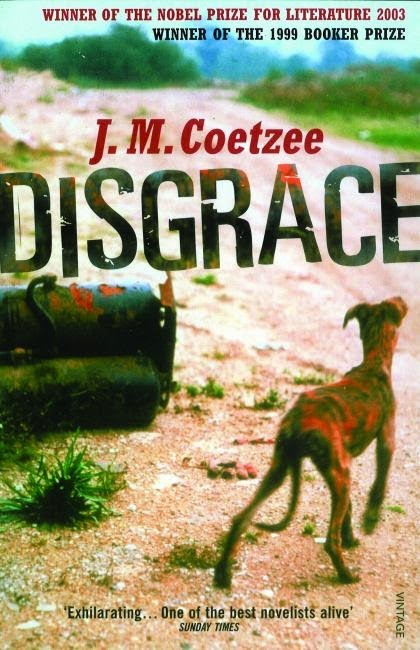
J.M. Coetzee, Disgrace

I write about one scene from this novel in my book, Touched Out. In the scene, a student, Melanie, “moves of her own accord” during a sexual experience with an older male professor, “but not quite of her own volition,” as philosopher of misogyny Kate Manne notes in her book, Entitled. The scene, referred to by the male professor as “not rape, not quite” shows how, in Manne’s words, a woman can be “cast into a cultural script in which a man’s sexual desire has outsize ethical importance,” how a lack of agency can lead her into unwanted sex, and how, in the aftermath of such a violation, she may even feel obligated to protect the man who has mistreated her.
Read about the other entries on the list.

Disgrace also appears on Roxane Gay's six favorite books list, Adam Ross's five best list of books on cruelty in fact and fiction, Ian Holding's top ten list of books that teach us about southern Africa and among Yann Martel's five favorite books and T.C. Boyle's four favorite books to turn to for comfort; it is one of Vendela Vida's favorite books of the last ten years.

--Marshal Zeringue

Monday, October 9, 2023

Six titles featuring ghosts with unfinished business

Meredith R. Lyons grew up in New Orleans, collecting two degrees from Louisiana State University before running away to Chicago to be an actor. In between plays, she got her black belt and made martial arts and yoga her full-time day job. She fought in the Chicago Golden Gloves, ran the Chicago Marathon, and competed for team U.S.A. in the savate world championships in Paris. In spite of doing each of these things twice, she couldn’t stay warm and relocated to Nashville. She owns several swords, but lives a non-violent life, saving all swashbuckling for the page, knitting scarves, gardening, visiting coffee shops, and cuddling with her husband and two panther-sized cats. Ghost Tamer is her first novel.

[Q&A with Meredith R. Lyons; 12 Yoga Questions with Meredith R. Lyons]

At CrimeReads Lyons tagged a "collection of unfinished business stories both long and short, creepy and slightly campy," including:
The Retired Witches Mystery series by Joyce and Jim Lavene

What could be better for spooky season than a ghost-witch combo? I love the delightful addition of witch familiars as cats who were humans in a previous life. This coven of witches was just getting prepped for retirement when one of them dies. Olivia won’t move on, however, as her unfinished business involves helping her coven achieve their goals. A fabulous fall cozy series.
Read about the other entries on the list.

My Book, The Movie: Spell Booked.

--Marshal Zeringue

Sunday, October 8, 2023

Five witchy new books for Friday the 13th

The 13th of October 2023 falls on Friday. To mark the occasion the staff at Publishers Weekly tagged five new witchy titles, including:
Sword Catcher by Cassandra Clare

Bestselling YA author Clare (the Shadowhunter Chronicles series) makes her adult debut with this enchanting if somewhat bloated fantasy, the first in a series. Kel is the Sword Catcher, bodyguard to Conor Aurelian, Prince of Castellane. Having sworn his undying loyalty to Conor (“I die that he might live forever”), Kel’s sole job is to keep the prince safe. When the prince’s reckless choices land him in hot water with slumlord Prosper Beck, Kel turns to the enigmatic Ragpicker King, criminal ruler of the underworld, for assistance. In alternating sections, readers are also introduced to Lin Caster. Lin is an Ashkar, those born with the only remaining magic left in Castellane and exiled behind the city-state’s walls. As a healer, however, Lin is able to enter the city, and the two narratives intertwine when Lin is called to heal one of the royals and she and Kel meet. Clare drops readers into this ornate and unique world and plants seeds for forbidden romance, dangerous magic, and brewing war to be harvested in later installments. The book at hand, however, lacks a sense of urgency, and Kel’s sections outshine Lin’s, making the pacing a bit uneven. Still, this multilayered epic is sure to be a hit with Clare’s many fans.
Read about the other entries on the list.

--Marshal Zeringue

Saturday, October 7, 2023

Seven titles that defined the Obama era

Andrew Ridker was born in Boston, Massachusetts in 1991. His second novel, Hope, is now out from Viking.

[Q&A with Andrew Ridker].

His debut novel, The Altruists, was a New York Times Editors’ Choice, a Paris Review staff pick, an Amazon Editors’ Pick, and the People Book of the Week. It won the Friends of American Writers Award and was longlisted for the Prix du Meilleur livre étranger and the Yasnaya Polyana Literary Prize.

Ridker is the editor of Privacy Policy: The Anthology of Surveillance Poetics and his writing has appeared in The New York Times, Esquire, Le Monde, Bookforum, The Paris Review Daily, Guernica, Boston Review, and elsewhere. A graduate of the Iowa Writers' Workshop, Ridker lives in Brooklyn, New York.

At Electric Lit he tagged seven novels that capture the cultural moment of Obama’s America, including:
A Little Life by Hanya Yanagihara

In his 2017 essay, “Considering the Novel in the Age of Obama,” to which this list is indebted, Christian Lorentzen defined four kinds of books that “have been particularly germane to the Obama years”: autofiction, fables of meritocracy, historical novels, and trauma novels. The biggest trauma novel of them all, in every respect, was undoubtedly A Little Life. Hanya Yanagihara’s epic was full of extraordinarily high highs—her four main characters are all some combination of handsome, successful, rich, loving, and glamorous—and unbearably low lows. (A tote bag bearing the names of her protagonists was ubiquitous in Brooklyn for a time, a rare feat for any novel, much less one that features so much physical abuse, pedophilia, and self-harm.) Lorentzen attributes the trauma novel’s success to the relative tranquility of the Obama era, “when American writers had the luxury of looking inward, investigating the systems that formed them, reimagining the romantic days just past, and registering the echoes of personal traumas.” Interestingly, the trauma novel only became more popular after Obama left office. It makes a kind of sense. After 2016, who wasn’t traumatized?
Read about the other entries on the list.

A Little Life is among Fatin Abbas's top ten books about chosen families, Christie Watson's five top books to inspire compassion, and Jason Flemyng's six best books.

--Marshal Zeringue

Friday, October 6, 2023

Nine crime novels featuring found families

Lori Rader-Day is the Edgar® Award-nominated and Agatha, Anthony, and Mary Higgins Clark award-winning author of The Death of Us, Death at Greenway, The Lucky One, Under a Dark Sky, The Day I Died, Little Pretty Things, and The Black Hour. She lives in Chicago, where she is co-chair of the mystery readers’ festival Midwest Mystery Conference (fka Murder and Mayhem in Chicago) and served as 2019-2020 national president of Sisters in Crime. She teaches creative writing for Northwestern University’s School of Professional Studies.

At CrimeReads Rader-Day tagged nine crime novels featuring characters who choose who they include at their crowded tables. One title on the list:
Quiet Neighbors by Catriona McPherson

When Jude’s life falls apart, she goes to the last place she remembers being happy. A bookshop, of course. The shop is a mess and so is the owner. Then a pregnant girl shows up, with an agenda, and Jude gets a chance to tidy up more than stacks of books.
Read about the other entries on the list.

--Marshal Zeringue

Thursday, October 5, 2023

Top 10 grudge holders in fiction

Sarah Bernstein is from Montreal, Canada, and lives in Scotland. Her writing has appeared in Granta among other publications.

Her first novel, The Coming Bad Days, was published in 2021. In 2023 she was named as one of Granta’s Best of Young British Novelists.

Bernstein's new novel is Study for Obedience.

At the Guardian she tagged ten books in which
the grudge holder’s ongoing refusal to forgive, the insistence on the unforgivable nature of the wrong committed, amount ... to a refusal to accept the condition of the world as it is – a refusal that is the basic precondition for a new and changed world.
One title on the list:
Lote by Shola von Reinhold

Lote’s protagonist Mathilda bears a grudge against institutions, including but not limited to the academic and literary establishments that erect canons via a process of exclusion and suppression. In the novel, Mathilda searches for traces of one of her “Transfixions”, Hermia Druitt, a forgotten Black modernist poet whose writings have mysteriously disappeared. Mathilda is a fabulous (and fabulously dressed) refusalist, as we learn when we follow her to an artist’s residency in a place called Dun, rejecting the stringent asceticism of the residency’s organisers while making use of the opportunity to pursue her own interests.
Read about the other entries on the list.

--Marshal Zeringue

Wednesday, October 4, 2023

Seven stories about falling into debt

Raul Palma is a second-generation Cuban American born and raised in Miami. His short story collection In This World of Ultraviolet Light won the 2021 Don Belton Prize.

His writing has appeared in Alaska Quarterly Review, The Greensboro Review, Hayden’s Ferry Review, and elsewhere. He teaches fiction at Ithaca College, where he is the associate dean of faculty in Ithaca College’s School of Humanities and Sciences.

A Haunting in Hialeah Gardens is Palma's debut novel.

At Electric Lit he tagged seven stories about the pressure of owing money. One title on the list:
Never Let Me Go by Kazuo Ishiguro

As Kathy H. faces down her own mortality, she recalls her life in Hailsham, a school for cloned children, who as adults will be expected to donate their organs to the people who commissioned their existence. What starts out as a novel veering toward resistance and rebellion, becomes a story about finding dignity in settling one’s debts and coming to terms with the cost. This novel raises many ethical questions about the ways that money and power can create hierarchies that privilege some forms of life over others.
Read about the other entries on the list.

Never Let Me Go is on Akemi C. Brodsky's list of five academic novels that won’t make you want to return to school, Claire Fuller's list of seven top dystopian mysteries, Elizabeth Brooks's list of ten great novels with unreliable narrators, Lincoln Michel's top ten list of strange sci-fi dystopias, Amelia Morris's lits of ten of the most captivating fictional frenemies, Edward Ashton's eight titles about what it means to be human, Bethany Ball's list of the seven weirdest high schools in literature, Zak Salih's eight books about childhood pals—and the adults they become, Rachel Donohue's list of seven coming-of-age novels with elements of mystery or the supernatural, Chris Mooney's list of six top intelligent, page-turning, genre-bending classics, James Scudamore's top ten list of books about boarding school, Caroline Zancan's list of eight novels about students and teachers behaving badly, LitHub's list of the ten books that defined the 2000s, Meg Wolitzer's ten favorite books list, Jeff Somers's lists of nine science fiction novels that imagine the future of healthcare and "five pairs of books that have nothing to do with each other—and yet have everything to do with each other" and eight tales of technology run amok and top seven speculative works for those who think they hate speculative fiction, a list of five books that shaped Jason Gurley's Eleanor, Anne Charnock's list of five favorite books with fictitious works of art, Esther Inglis-Arkell's list of nine great science fiction books for people who don't like science fiction, Sabrina Rojas Weiss's list of ten favorite boarding school novels, Allegra Frazier's top four list of great dystopian novels that made it to the big screen, James Browning's top ten list of boarding school books, Jason Allen Ashlock and Mink Choi's top ten list of tragic love stories, Allegra Frazier's list of seven characters whose jobs are worse than yours, Shani Boianjiu's list of five top novels about coming of age, Karen Thompson Walker's list of five top "What If?" books, Lloyd Shepherd's top ten list of weird histories, and John Mullan's lists of ten of the best men writing as women in literature and ten of the best sentences as titles.

--Marshal Zeringue

Tuesday, October 3, 2023

Five top titles about India’s 1947 Partition

Shilpi Suneja is the author of House of Caravans. Born in India, her work has been nominated for a Pushcart Prize and published in Guernica, McSweeney’s, Cognoscenti, and the Michigan Quarterly Review. Her writing has been supported by a National Endowment for the Arts literature fellowship, a Massachusetts Cultural Council fellowship, a Grub Street Novel Incubator Scholarship, and she was the Desai fellow at the Jack Jones Literary Arts Retreat. She holds an MA in English from New York Universityand an MFA in creative writing from Boston University, where she was awarded the Saul Bellow Prize.

At Lit Hub Suneja tagged five books to help with our "understanding of [the Indian] Partition [of 1947]—as a trauma narrative, and as a living thing regenerating itself over and over with each generation." One title on the list:
Ritu Menon and Kamala Bhasin, Borders & Boundaries: Women in India’s Partition

Because the history of men is not the same as the history of women, and because men are almost always asked first and tend to speak first, this book is essential reading to understand the gendered nature of Partition violence. Caught in between the borders and boundaries of religion, community, and nation, tasked with upholding family honor, the women tell a decidedly different story.

From bearing “permissible violence”—drowned and killed by their own fathers and brothers to save family honor, or even asked to commit suicide to save that honor—to forced violence—rape, mutilation, abduction, conversion at the hands of “enemy” men, forced restoration by the hands of the state, women’s bodies become the very sites of contestation where entire nations define their ideas of identity, honor, selfhood, sovereignty.

Out of the array of incredulous violence inflicted upon women, the most incredulous is probably that by the state, in the form of the Abducted Persons Recovery and Restoration Bill. Passed in the parliaments of both India and Pakistan, the bill gave the governments carte blanche to extract with the help of police force all those persons reported abducted or missing by their families.

As a result, thousands of women were handcuffed and yanked away from their new families (who may or may not have inflicted sexual violence upon them), yanked away from the children they birthed in those unions, and force-rehabilitated into their families of origin, that more often than not, did not want them back. These “restored” women had no legal recourse, no choice in the matter of where they could live, which border they wanted to belong.
Read about the other entries on the list.

Also see Anjali Enjeti's seven books about the Partition of India & Pakistan.

--Marshal Zeringue

Monday, October 2, 2023

Seven top titles about witches and badass covens

Kim DeRose writes dark, magical stories about strong, magical girls.

She grew up in Santa Barbara, California, where she spent childhood summers reading books and writing stories (which she was convinced her local bookstore would publish). She now lives in New York City, where she spends all seasons reading books and writing stories.

DeRose earned her MFA in film directing from UCLA, and currently works in digital media.

When she’s not reading or writing she can be found listening to podcasts on long walks, drinking endless cups of coffee, and spending time with her family.

For Girls Who Walk Through Fire is her debut novel.

At CrimeReads DeRose tagged seven books for those who "can’t get enough of witches and adore badass covens," including:
Once and Future Witches by Alix E. Harrow

Sisters. Witches. The suffragist movement. Set in an alternate reality where witches are real but have been outlawed, the three estranged Eastwood sisters—Beatrice Belladonna, Agnes Amaranth, and Juniper James—reunite in New Salem and use their illicit magic to form a secret coven and help bring women’s power back into the world. All three sisters are completely badass in their own individual ways, and they relentlessly pursue the magic and power that is their—and every women’s—birthright. I loved the diverse range of women who joined their coven, and the inclusion of queer characters. Once I dove into the Eastwood sisters’ world, I didn’t want to leave.
Read about the other entries on the list.

The Once and Future Witches is among Mark Skinner's twenty top witch lit titles, Sarah Pinsker's five SFF books that showcase siblings at their core, and Heather Walter's five SFF books about wicked women.

--Marshal Zeringue

Sunday, October 1, 2023

Eight fictional dinner parties gone wrong

Lee Kelly is the author of City of Savages, a Publishers Weekly “Best of Spring 2015” pick and a VOYA Magazine “Perfect Ten” selection, A Criminal Magic, which was optioned and developed for a television series by Warner Bros., The Antiquity Affair, co-written with Jennifer Thorne (2023), With Regrets (Fall 2023) and The Starlets (forthcoming, Fall 2024).

Her short fiction and essays have appeared in Gingerbread House, Orca, and Tor.com, among other publications, and she holds her MFA degree from the Vermont College of Fine Arts. An entertainment lawyer by trade, Kelly has practiced law in Los Angeles and New York. She currently lives with her husband and two children in New Jersey, where you’ll find them engaged in one adventure or another.

At Electric Lit she tagged "eight of my favorite recent novels featuring a dangerous dinner, with the term 'danger' encompassing quite a variety of threats and menacing situations." One title on the list:
A Head Full of Ghosts by Paul Tremblay

Tremblay’s horror novel chronicles the dynamics of a New England family that begins to unravel when eldest daughter, Marjorie, starts exhibiting signs of demonic possession. Though is Marjorie the victim of a diabolic hold . . . or is she suffering from acute schizophrenia? Things still aren’t clear when the family sits down to dinner in one of the most unsettling scenes I’ve ever read, a harrowing sequence where, regardless of the truth, Marjorie proves to be an unequivocal danger to herself and her family.
Read about the other entries on the list.

A Head Full of Ghosts is among Wendy Webb's eight top modern gothic mysteries.

--Marshal Zeringue