Thursday, March 31, 2016

Top ten books on 1960s America

Stuart Cosgrove is the author of Detroit 67: the Year that Changed Soul. One of his ten top books on 1960s America, as shared at the Guardian:
The Medium Is the Massage by Marshall McLuhan

Another landmark book from 1967 that revolutionised the way we see technological media and communication. A huge influence on Wired magazine, it foresaw ideas we take for granted today, such as the growth of participative media and user-generated content. It manages to crystallise big ideas in a small, accessible format.
Read about the other books on the list.

--Marshal Zeringue

Wednesday, March 30, 2016

The ten best adventure novels

Ian McGuire's new novel is The North Water.

One of the author's ten top adventure novels, as shared at Publishers Weekly:
Moby-Dick
by Herman Melville

Melville started off writing more straightforward adventure novels set in exotic South Sea locations and featuring alluring and dangerous natives, but then he wrote Moby-Dick, which was much more brilliant and original and much less commercially successful. The basic framework of the adventure novel is still there, but for most of the novel the hazards Ishmael wrestles with are philosophical rather than physical.
Read about the other entries on the list.

Moby-Dick appears among Jeff Somers's five top books that will expand your vocabulary and entertain, Four books that changed Mary Norris, Tim Dee's ten best nature books, the Telegraph's fifteen best North American novels of all time, Nicole Hill's top ten best names in literature to give your dog, Horatio Clare's five favorite maritime novels, the Telegraph's ten great meals in literature, Brenda Wineapple's six favorite books, Scott Greenstone's top seven allegorical novels, Paul Wilson's top ten books about disability, Lynn Shepherd's ten top fictional drownings, Peter Murphy's top ten literary preachers, Penn Jillette's six favorite books, Peter F. Stevens's top ten nautical books, Katharine Quarmby's top ten disability stories, Jonathan Evison's six favorite books, Bella Bathurst's top 10 books on the sea, John Mullan's lists of ten of the best nightmares in literature and ten of the best tattoos in literature, Susan Cheever's five best books about obsession, Christopher Buckley's best books, Jane Yolen's five most important books, Chris Dodd's best books, Augusten Burroughs' five most important books, Norman Mailer's top ten works of literature, David Wroblewski's five most important books, Russell Banks' five most important books, and Philip Hoare's top ten books about whales.

--Marshal Zeringue

Tuesday, March 29, 2016

Top ten books featuring marriages with dark secrets

Fiona Barton, author of The Widow, tagged her ten favorite books centering on marriages that hold dark secrets, at the B&N Reads blog:
Bring Up The Bodies, by Hilary Mantel

This partnership is one of the best known and examined in history, but Mantel makes the marriage of King Henry VIII and Anne Boleyn and the adulterous and political secrets that destroy it as accessible and immediate as an episode of Coronation Street. Of course, no one actually loses their head in Corrie.
Read about the other entries on the list.

The position of Queen, in Wolf Hall and Bring up the Bodies, is among Rachel Cantor's ten worst jobs in books.

--Marshal Zeringue

Monday, March 28, 2016

Six top books about big ideas

Douglas Rushkoff's latest book is Throwing Rocks at the Google Bus: How Growth Became the Enemy of Prosperity. One of his six favorite books about big ideas, as shared at The Week magazine:
The Peripheral by William Gibson

Gibson's novel describes a digital economic landscape only a notch or two more extreme than our own, and plays out a scenario detailing what happens when we get all the tech we want, but it's all geared toward extracting value from us. Crazy brilliant.
Read about the other books on the list.

--Marshal Zeringue

Sunday, March 27, 2016

The five creepiest rabbits in fiction

Diana Biller is a writer and dinosaur enthusiast.

At B & N Reads Biller tagged five of the creepiest rabbits in fiction, including:
Fiver, from Watership Down, by Richard Adams

This one really isn’t the poor little fellow’s fault: he’s a clairvoyant, and clairvoyants are inherently creepy. No one wants to be told their warren is about to be destroyed, particularly not when that prophecy comes in rhyme, and then there’s the whole thin line between seers and insanity that seems to permeate mythology. A clairvoyant bunny that may or may not go insane? I’ll skip it, thanks.
Read about the other entries on the list.

Watership Down is on Jon Walter's top ten list of heroes of refugee fiction, John Dougherty's top ten list of fictional badgers, and Piers Torday's top ten list of animal villains; it is a book Junot Díaz hopes parents will read to their kids.

--Marshal Zeringue

Saturday, March 26, 2016

Five books that shaped Jason Gurley's "Eleanor"

Jason Gurley is the author of the novels Greatfall, The Man Who Ended the World, and the ongoing Movement series. His bestselling self-published novel Eleanor was acquired by Crown Publishing in the U.S., HarperCollins in the U.K., Editora Rocco in Brazil, Arunas in Turkey, and Heyne Verlag in Germany. His short fiction has appeared in Lightspeed Magazine and numerous anthologies, among them Loosed Upon the World and Help Fund My Robot Army!!! from editor John Joseph Adams. Gurley lives and writes in Oregon.

One of five books that shaped him and Eleanor, as shared at the Harper Voyager blog:
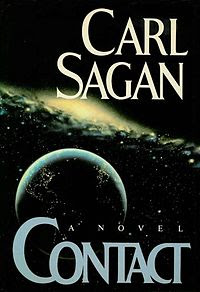
Contact, by Carl Sagan

Perhaps it’s an unlikely influence, but without Contact, Eleanor wouldn’t have existed at all. The novel’s flawed, intelligent heroine, Eleanor Arroway, not only gave me the name of my protagonist, but Sagan’s gentle skepticism prompted me to ask questions of my own life which became the root of my early drafts.
Read about the other entries on the list.

Eleanor Arroway from Contact is among io9's ten greatest (fictional) female scientists.

The Page 69 Test: Eleanor.

My Book, The Movie: Eleanor.

Writers Read: Jason Gurley.

--Marshal Zeringue

The ten best cycling books

Rob Penn is the author of The Man Who Made Things Out of Trees and It’s All About the Bike. One of his ten best cycling books, as shared at the Guardian:
Bicycle: The History

David V Herlihy (2004)

For much of the 20th century, the history of the bicycle was muddied by the proprietary claims and myths of competing industrial nations: Germany, France, England, Italy, the US and even Scotland all asserted they had invented the machine. Herlihy brings academic rigour and clarity to the development of the steel horse. It is a fantastic tale – of ingenuity, eccentric inventors, technological impasses, lost fortunes and luck, which culminates in the first modern bicycle. The prose can be a little dry but the illustrations are excellent.
Read about the other entries on the list.

Also see Jon Day's ten best books about cycling, the Barnes & Noble Review's five top books on cycling, John Mullan's list of ten of the best bicycles in literature, Marjorie Kehe's list of ten great books about cycling, Matt Seaton's top 10 books about cycling, and William Fotherham's top ten cycling novels.

--Marshal Zeringue

Friday, March 25, 2016

Top ten embarrassing parents in books

Anna Wilson's newest book is The Parent Problem. At the Guardian, Wilson tagged her top ten embarrassing parents in books, including:
I Capture the Castle by Dodie Smith

Cassandra Mortmain seems to lead an exotic and romantic existence, living in a tumbledown castle, sitting in a turret and writing in her journal. I know I wanted to be her when I read the book, hence my character, Skye Green, feels the same way about the Mortmain family. But on re-reading it as an adult, I can see how pained she is at the eccentric behaviour of her novelist father who never earns any money and keeps them teetering on the edge of abject poverty. And then there is her crazy stepmum, Topaz, who dyes everyone’s clothes green and is so otherworldly that mothering seems rather beyond her.
Read about the other entries on the list.

I Capture the Castle is among Rose Mannering’s top five books, Diane Johnson's six favorite books, and Sophia Bennett's top ten stylish reads.

--Marshal Zeringue

Thursday, March 24, 2016

Top ten books about revolutionaries

Alexei Sayle is an English stand-up comedian, actor, author and former recording artist. His new book is Thatcher Stole My Trousers. One of Sayle's ten top books about revolutionaries, as shared at the Guardian:
The Autobiography of Malcolm X

Written in collaboration with Alex Haley, who interviewed Malcolm more than 50 times and finished the narrative after Mr X’s death. It is a gripping read from the opening, with the Ku Klux Klan menacing his pregnant mother, through to the troubled last months of his life: we follow Malcolm Little, common thief, on his journey to Malcolm X, inspirational leader. His ambitions for the black civil rights struggle in the US led him to what were then truly revolutionary ambitions for American society. They still are. The grand story also contains a useful security tip: from his years of housebreaking, Malcolm tells us that the best deterrent to being burgled is to leave a bathroom light on. The burglar knows you won’t be up and in the living room at 3am. But he can’t be certain that there isn’t an angry homeowner in the bathroom.
Read about the other entries on the list.

Also see: Neel Mukherjee's top ten books about revolutionaries.

--Marshal Zeringue

Wednesday, March 23, 2016

Five fantastic novels that mess with time

At B & N Reads Jenny Shank tagged five innovative novels that mess with chronology, including:
Truth Like The Sun, By Jim Lynch

What was Seattle like before it became the vibrant tech-and-coffee-loving city we know it as today? In 1962 Seattle hosted the World’s Fair, which gave it the Space Needle and propelled it from being a “stuffy, postwar” outpost into the city of the future. Lynch’s novel follows the young businessman Roger Morgan, who spurred Seattle to host the World’s Fair in 1962, and alternates that chapter of his life with his story in 2001, when the 70-year-old decides to run for mayor of the city. Helen Gulanos, a new-to-town journalist, digs into Morgan’s past to uncover the shady secrets beneath the exalted fair.
Read about the other entries on the list.

--Marshal Zeringue

Tuesday, March 22, 2016

Five books that show us the weirder side of the wild west

Sam Reader is a writer and conventions editor for The Geek Initiative. He also writes literary criticism and reviews at strangelibrary.com. One of his top five books that show us the weirder side of the wild, wild west, as shared at the B & N Sci-Fi & Fantasy Blog:
Boneshaker, by Cherie Priest

The first volume of a steampunk alternate history universe called “Clockwork Century,” this is the story of an alternate Seattle, where it wasn’t a massive earthquake that created the infamous Underground, but a massive steam-powered drill invented by a man named Leviticus Blue that ripped through downtown Seattle, uncovering a deposit of “blight gas” and creating an infestation of zombies (and wrecking a large portion of the city in the process). Years later, Blue’s widow Briar Wilkes ventures into the walled city to retrieve her son Zeke, who hopes to find evidence to clear his family’s name. Priest’s stated intent was to give steampunk a “magnum opus,” and Boneshaker delivers with exhaustive worldbuilding, vivid detail, and a ton of atmosphere.
Read about the other entries on the list.

--Marshal Zeringue

Monday, March 21, 2016

Katie Roiphe's six favorite books that deal with illness & dying

Katie Roiphe's new book, The Violet Hour, examines how several great writers confronted their own impending deaths. One of Roiphe's six favorite books that deal with illness and dying, as shared at The Week magazine:
On Being Ill by Virginia Woolf

In this lovely, wise book, Woolf offers a wholly original meditation on being ill. She captures the separateness from everyday life engendered by illness, the isolation (both the good and bad sides of it), and the ways in which illness inheres in identity.
Read about the other entries on the list.

--Marshal Zeringue