Tuesday, July 12, 2011

Five books on grammar

At the Independent Alice-Azania Jarvis compiled a brief reading list on grammar, including one humorous book:
The Mother Tongue by Bill Bryson

In his characteristic wry style, Bryson, best known for his tongue-in-cheek travel memoirs, takes a rollicking look at the origins and evolution of the English language. How did it become so internationally dominant? How did today's version emerge? Where do dialects come from? Packed with anecdotes, nuggets of wisdom and hilarious instances of grammar gone wrong, The Mother Tongue offers an accessible, refreshing survey of the linguistic landscape.
Read about the other books on grammar.

--Marshal Zeringue

Monday, July 11, 2011

Ten of the best snakes in literature

At the Guardian, John Mullan named ten of the best snakes in literature.

One entry on the list:
The Poisonwood Bible, by Barbara Kingsolver

Zealous Baptist Nathan Price takes his family to the Belgian Congo where he works as a missionary. Someone starts planting snakes in the homes of those who know them. One morning they find a curled-up green mamba and, as it slithers off, hear a shriek from Ruth May, the youngest of the four Price sisters. She has been bitten on the shoulder and dies as they watch.
Read about the other entries on the list.

--Marshal Zeringue

Sunday, July 10, 2011

Six recommended books featuring female sleuths

Tess Gerritsen is the best-selling author of the Jane Rizzoli crime thrillers, including The Silent Girl.

For The Week magazine, she named six favorite books featuring female sleuths, including:
The Nancy Drew mysteries by Carolyn Keene

It’s impossible not to mention the one sleuth who influenced just about every female mystery writer in America: Nancy Drew, whose stories were ghostwritten by several authors under the Keene pseudonym. Quick-witted and courageous, Nancy demonstrated to girls of my generation that we could accomplish anything, even with our girlfriends in tow.
Read about the other entries on the list.

Nancy Drew made Adrian McKinty's top ten list of lady detectives.

Also see Anne Holt's top ten list of female detectives.

--Marshal Zeringue

Saturday, July 9, 2011

Five depressing beach reads

Sloane Crosley is the author of How Did You Get this Number and I Was Told There'd be Cake.

For The Daily Beast, she named five depressing beach reads.

One title on the list:
The Beach
by Alex Garland

In the book version of the movie, Leonardo DiCaprio’s character is British, not American, which makes the novel less of a statement about American travel hubris but much more saddled with pathos. Despite ending unhappily—you know what they say about not eating the yellow snow? Don’t lie in the red sand, ya hear?—it is quick and good and after about 30 pages, you can see why it was ripe for movie adaptation.
Read about the other entries on the list.

The Beach
also appears on the Guardian editors' list of the 50 best summer reads ever and John Mullan's list of ten of the best swimming scenes in literature.

--Marshal Zeringue

Friday, July 8, 2011

Five best: literary tales of real-life crimes

Ron Hansen is the author, most recently, of the true-crime novel A Wild Surge of Guilty Passion.

For the Wall Street Journal, he named a five best list of literary tales of real-life crimes.

One book on the list:
Blonde
by Joyce Carol Oates (2000)

I have read several biographies of Marilyn Monroe but found none that can match Joyce Carol Oates's "Blonde"—a striking and tragic portrait of a lost, anxious girl who would in time become an exploited, indulged, mercurial star with an endless hunger for love and security. The familiar outlines of the Monroe story are here: marrying fame in Joe DiMaggio and seeking a father figure in playwright Arthur Miller, neither of whom could help her. She was seemingly involved with President John F. Kennedy when she was found dead of a drug overdose. This end to her life is generally viewed as a suicide; "Blonde" depicts Monroe's death, convincingly if controversially, as murder.
Read about the other entries on the list.

Blonde appears on Janet Fitch's book list.

--Marshal Zeringue

Thursday, July 7, 2011

Top 10 fairytales

Cornelia Funke is an internationally bestselling, multiple award-winning author, best known for writing the Inkworld trilogy, Dragon Rider, and The Thief Lord.

Named by Time magazine as one of the "100 most influential people in the world today," Cornelia currently lives with her family in Los Angeles, California, in a house full of books.

For the Guardian, she named her top ten fairytales.

One entry on the list:
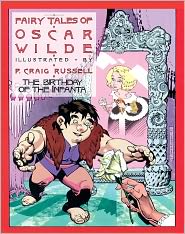
The Birthday of the Infanta

Another tale that has quite modern origins. I mention this one, because it touched me so deeply that I illustrated it once for a picture book project, but in fact all of Oscar Wilde's fairytales should be on this list. He is the master for me, when it comes to modern fairytales. I like him better than Andersen, who doesn't have Wilde's social compassion. The ugly dwarf doesn't turn into a beautiful swan. Wilde loves him as the ugly dwarf.
Read about the other fairytales on the list.

Also see: Five best academic studies of fairy tales.

--Marshal Zeringue

Wednesday, July 6, 2011

Ten of the best: love at first sight

At the Guardian, John Mullan named ten of the best coups de foudre in literature.

One entry on the list:
Anna Karenina by Leo Tolstoy

At the railway station to meet his mother, Vronsky steps back to let a lady out of her compartment and glimpses her face. "In that brief look Vronsky had time to notice the suppressed eagerness which played over her face ... It was as though her nature were so brimming over with something that against her will it showed itself now in the flash of her eyes, and now in her smile". Their fates are sealed.
Read about the other entries on the list.

Anna Karenina also appears on Eleanor Birne's top ten list of books on motherhood, Esther Freud's list top ten list of love stories, Chika Unigwe's six favorite books list, Elizabeth Kostova's list of favorite books, James Gray's list of best books, Marie Arana's list of the best books about love, Ha Jin's most important books list, Tom Perrotta's ten favorite books list, Claire Messud's list of her five most important books, Alexander McCall Smith's list of his five most important books, Mohsin Hamid's list of his ten favorite books, Louis Begley's list of favorite novels about cheating lovers, and among the top ten works of literature according to Peter Carey and Norman Mailer. John Mullan put it on his lists of ten of the best births in literature, ten of the best ice-skating episodes in literature, and ten of the best balls in literature.

--Marshal Zeringue

Tuesday, July 5, 2011

Top seven detective series set in foreign locales

At the Christian Science Monitor, Colby Bermel named the top seven detective series set in foreign locales.

Two entries on the list:
"Omar Yussef" series, by Matt Beynon Rees

Set in today’s Middle East, Matt Beynon Rees’ works recount the mystery-solving of reluctant history-teacher-turned-detective Omar Yussef, who lives in a Palestinian area of the West Bank. Yussef’s first case is an effort to prove that one of his former students, arrested for allegedly assisting Israel snipers to assassinate a member of the Palestinian Martyrs Brigade, is innocent.

"Dr. Siri Paiboun" series, by Colin Cotterill

The only doctor left in 1970s communist Laos, the eccentric 72-year-old Siri Paiboun is appointed to be the government’s chief medical examiner. Hardly a qualified professional, the sardonic Siri uses unorthodox methods (talking with forest spirits and the dead, perhaps?) to solve crimes like bizarre murders and mysterious disappearances.
Read about the other series on the list.

Visit Colin Cotterill's website, and learn more about Dr. Siri Paiboun at The Page 69 Test: Anarchy and Old Dogs and My Book, The Movie: Curse of the Pogo Stick.

Visit Matt Beynon Rees' website and blog. Learn more about Omar Yussef at: The Page 69 Test: The Collaborator of Bethlehem; My Book, The Movie: The Collaborator of Bethlehem; The Page 69 Test: A Grave in Gaza; The Page 69 Test: The Samaritan's Secret; The Page 69 Test: The Fourth Assassin; and My Book, The Movie: The Fourth Assassin.

--Marshal Zeringue

Monday, July 4, 2011

Ten best literary picnics

At the Guardian, Kate Kellaway named the ten best literary picnics.

One picnic on the list:
Enduring Love
by Ian McEwan

The setting is a beech wood in the Chilterns and the picnic ought to have been tasteful, middle-class and uneventful. The ingredients were bought at Carluccio’s in London, the centrepiece is “a great ball of mozzarella”. There are olives, mixed salad and focaccia. The wine is a 1987 Daumas Gassac – opened but never enjoyed because of what is to eclipse the picnic forever and launch the turbulent novel: a hot air balloon in trouble which has the narrator abandoning his picnic and running across the fields.
Read about the other picnics on the list.

Enduring Love also appears on Douwe Draaisma's list of the five best novels about mental disorders and John Mullan's lists of ten of the best examples of unrequited love in literature and ten of the best balloon flights in fiction.

--Marshal Zeringue

Sunday, July 3, 2011

Adam Ross's favorite books under 200 pages

Adam Ross is the author of the novel Mr. Peanut and a new collection of short stories, Ladies and Gentlemen.

For The Daily Beast, he named his favorite books under 200 pages.

One title on the list:
A Sport and a Pastime
by James Salter

On its surface, Salter’s 191-page classic recounts the erotic odyssey of Yale dropout Phillip Dean and French shopgirl Marie Costallat. A closer reading reveals the unnamed narrator’s struggle to live life rather than be condemned to the role of observer. Sensual and atmospheric, it’s been passed among writers like contraband since its 1967 publication partially out of reverence for Salter’s matchless style: “The waitress … wears a turtleneck sweater, black shirt, a leather belt cinched tightly around her waist dividing her into two erotic zones. Behind the bar the radio is going softly. Outside, the snow is falling, covering the car like a statue of a hero, filling the tracks that lead to where it is parked.”
Read about the other books on the list.

--Marshal Zeringue

Saturday, July 2, 2011

Simon Armitage's six best books

Simon Armitage was born in and lives in West Yorkshire, England. His books include Killing Time, Selected Poems, The Universal Home Doctor, Tyrannosaurus Rex Versus the Corduroy Kid, and his acclaimed translation of Sir Gawain and the Green Knight. In 1993, he was named the London Sunday Times Young Writer of the Year; he is the recipient of a Forward Prize and in 2010 won the Keats-Shelley Prize for Poetry. He works as a freelance writer, broadcaster, and playwright; writes extensively for radio, television, and film; has taught at the University of Iowa Writers’ Workshop; and is professor of poetry at the University of Sheffield.

Knopf will release Seeing Stars, his new collection of poems, in the US in August 2011.

One of Armitage's six best books, as told to the Scottish Sunday Express:
Le Morte d’Ar thur by Sir Thomas Malory

Malory’s masterwork is a jewel in the crown of British literature. He pulled all the Welsh myths and French Romances together creating the definitive work by which we know the tales of King Arthur. Malory himself was a shadowy figure, he was a knight-prisoner who may have written the work while he was incarcerated in the Tower of London.
Read about the other books on the list.

Learn about Simon Armitage's top ten bird poems.

--Marshal Zeringue

Friday, July 1, 2011

Five books that inspired Paul Krugman

Paul Krugman is a columnist at the New York Times and a professor of Economics and International Affairs at Princeton University. In 1991 the American Economic Association awarded him its John Bates Clark medal, a prize given every two years to "that economist under forty who is adjudged to have made a significant contribution to economic knowledge." In 2008 he was awarded the Nobel Prize for Economics. His books include The Accidental Theorist and The Conscience of a Liberal.

With Sophie Roell at FiveBooks, Krugman discussed why he considers himself a liberal as well as five books that inspired him, including:
Foundation
by Isaac Asimov

The first book you’ve chosen isn’t about economics at all; it’s a work of science-fiction, Isaac Asimov’s Foundation trilogy. But was it part of what inspired you to become an economist?

Yes. This is a very unusual set of novels from Isaac Asimov, but a classic. It’s not about gadgets. Although it’s supposed to be about a galactic civilisation, the technology is virtually invisible and it’s not about space battles or anything like that. The story is about these people, psychohistorians, who are mathematical social scientists and have a theory about how society works. The theory tells them that the galactic empire is failing, and they then use that knowledge to save civilisation. It’s a great image. I was probably 16 when I read it and I thought, “I want to be one of those guys!” Unfortunately we don’t have anything like that and economics is the closest I could get.

I do get a sense from your columns in The New York Times that you are on a mission…

Obviously I try to do straight economics and I do it as well as I can. But this is for a purpose. That purpose is not to find better ways of making money – although I have no problem with people doing that. The purpose is actually to make a better world. So yes, I do feel that I am trying to do something that goes beyond just the analysis.

When I read your book, The Conscience of a Liberal, I came to realise that that purpose is to save the middle-class America you grew up in. Do you feel it’s under threat?

It’s not under threat – it’s actually largely, but not completely, gone. We’re trying to recapture it. We really have had a tremendous polarisation [in wealth]. People notice it every once in a while and it comes as a huge revelation to them. So for example, in last week’s New York Times, Nicholas Kristof had a column about how maybe we’re turning into Pakistan. It’s clear that we are not at all the relatively equal middle-class society we were, and we’re getting less so. That’s something you want to try to turn around.
Visit The Browser to read about the other books on Krugman's list.

--Marshal Zeringue