Tuesday, December 6, 2011

Six favorite books about war

Jack Jacobs is one of 144 Medal of Honor recipients featured in Medal of Honor, a new book of photographs and profiles assembled to commemorate the medal's 150th anniversary.

One of Jacobs's six favorite books about war, as told to The Week magazine:
The Killer Angels by Michael Shaara

Gettysburg was not just another battle in history: It forever changed the life of this country. Some 50,000 Americans lost their lives over three days. Shaara's depiction of the battle is fictional, but it bares the human soul, and is incomparable in conveying the atmosphere of the war.
Read about the other books on the list.

The Killer Angels is on the Christian Science Monitor's list of the ten best novels of the U.S. Civil War.

--Marshal Zeringue

Monday, December 5, 2011

The ten best fictional sleuths

For The Observer, Euan Ferguson came up with a list of the ten best fictional sleuths.

One entry on the list:
The Continental Op
Dashiell Hammett

I’ve gone for this Man With No Name rather than Philip Marlowe and his unbeatable one-liners because, evocative though Raymond Chandler’s antihero is, Marlowe too often shot first and asked questions afterwards. Hammett (pictured) gave us a wise and ego-free sleuthing flatfoot, who follows up and follows up and, rained on and cold and tired, keeps following up tiny matchbook leads until he has done his paid job. True sleuthing in Red Harvest and The Dain Curse and we never knew his name. To make up for this, Hammett gave us Sam Spade.
Read about the other entries on the list.

The Continental Op (in The Big Knockover) also appears on Jerome Charyn's list of the five best tales of dislocation. Hammett is one of Barry Forshaw's six American noir masters.

--Marshal Zeringue

Sunday, December 4, 2011

Five top books on dangerous minds

One title on the Barnes & Noble Review's list of five books on dangerous minds:
Éminence
by Jean-Vincent Blanchard

Though the name Cardinal Richelieu was made most famous -- or infamous -- through Alexandre Dumas' fictional rendering of him as the power behind the Bourbon throne, the real Armand-Jean du Plessis proves a fascinatingly many-sided figure in Jean-Vincent Blanchard's new study. A ruthless supporter of his royal patron, Louis XIII, the "Red Eminence" was also a lover of literature and the theatre, and the founder of the Académie Française. A richly rewarding study of both an early student of absolute state power, and how his influence built the foundation for France's domination of seventeenth-century Europe.
Read about the other books on the list.

Writers Read: Jean-Vincent Blanchard.

My Book, The Movie: Éminence.

The Page 99 Test: Éminence.

--Marshal Zeringue

Saturday, December 3, 2011

Five best books on the French Resistance

Caroline Moorehead's latest book is A Train in Winter: An Extraordinary Story of Women, Friendship, and Resistance in Occupied France.

One of her five best books on the French Resistance, as told to the Wall Street Journal:
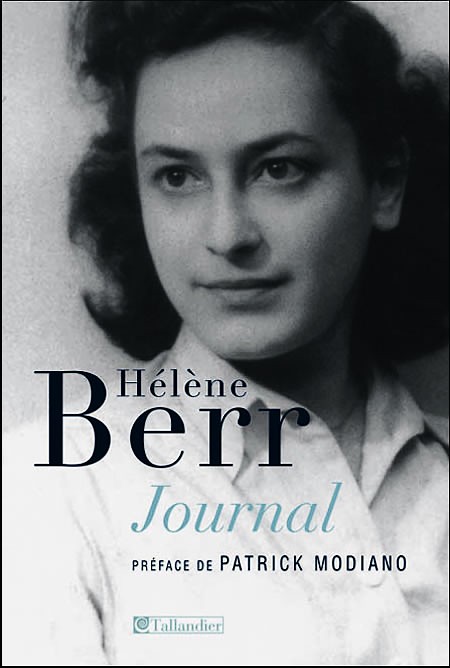
Journal
by Hélène Berr (2008)

When Hélène Berr began her diary in April 1942, she was 21, a clever young Jewish woman who had recently graduated from the Sorbonne and played the violin. Her father was a leading researcher in industrial chemistry. The family was more attached to French republicanism than to Judaism. What the Berrs did not grasp was that their assimilation would not protect them from the Germans. Her diary traces the spread of anti-Semitic measures—the orders for Jews to wear a yellow star, the round-ups and deportations. Berr also records the attitudes of the French—both good and bad—toward what was happening. As first foreign-born Jews, then French Jews, fall into German hands, her tone becomes more anxious. We witness in this diary a poignant mental journey from carefree youth to grim adulthood. Deported to Auschwitz on her 23rd birthday, Hélène Berr died five days before liberation.
Read about the other books on the list.

--Marshal Zeringue

Friday, December 2, 2011

Top ten essays

Harry Mount is a journalist, author and editor of the Notting Hill Editions Journal, which commissions a new essay every week.

One of his top ten essays, as told to the Guardian:
Truman Capote, "The Duke in his Domain" (1957)

Capote is best remembered for his novels, but his non-fiction was exceptional: acidly witty, to the point of nastiness; hyper-observational, to the point of even deeper nastiness. But what is more enjoyable – or, often, truer – than nastiness?

This is the essay-as-interview - in this case with Marlon Brando, at the height of his fame. There's a good deal of nastiness, and racism – "You come see Marron?" says Capote's Japanese guide. But it also gives a rare insight into the perils of celebrity: of too big an entourage, of isolation, of too many appetites being too readily satisfied.

For dinner, Brando, on a diet, orders soup, beefsteak with French-fried potatoes, three supplementary vegetables, a side dish of spaghetti, rolls and butter, a bottle of sake, salad, and cheese and crackers.
Read about the other essays on the list.

Read "The Duke in his Domain" at The New Yorker's website.

--Marshal Zeringue

Thursday, December 1, 2011

Top ten books about the planet

Nick Crane is a cartographer, explorer, writer and television presenter in the UK. In 1992–3, he walked across Europe, from the Atlantic Ocean to the Black Sea.

His latest book is Barefoot Books World Atlas.

One of Crane's top ten books about the planet, as told to the Guardian:
A Short History of Nearly Everything by Bill Bryson

Bill's a national treasure, though we've borrowed him really, because he's American. Every school library in the land ought to own a copy because this is core science at its most fun. Bill takes his readers on a journey, and we meet a lot of very strange, brilliant people like Edwin Hubble, Henri Becquerel and a chap called Einstein. The clever thing about Bill's book is that he visits many of the places he writes about. So hydrothermal explosions are explained during a trip to Yellowstone with a geologist called Doss, who rides a Harley Davidson. Why weren't my school science books like this, please sir?
Read about the other books on the list.

A Short History of Nearly Everything is one of Paul McEuen's six favorite books and Linda Greenlaw's favorite books.

--Marshal Zeringue

Wednesday, November 30, 2011

Ten vampire stories more romantic than "Twilight: Breaking Dawn"

At io9, Charlie Jane Anders tagged ten vampire stories that are more romantic than Breaking Dawn.

One book on her list:
Interview with the Vampire

What it's about: Louis is fascinated by the beautiful, angelic Lestat — until Lestat turns Louis into a vampire, and Louis has to come to terms with an eternity of feeding off blood. Louis and Lestat are inseparable companions, until Louis eventually escapes and finds a new companion, Armand.
Why it's romantic: The bond between Louis and Lestat is complex and often ugly — but also quite beautiful. Lestat teaches Louis to take life, but also to realize that existence is meaningless without a reverence for life.
Read about the other vampire stories on the list.

Interview with the Vampire is one of Lynda Resnick's best books.

--Marshal Zeringue

Tuesday, November 29, 2011

Top ten books about tiny people

Conn Iggulden is a bestselling author of historical fiction for adults and co-author with his brother Hal of The Dangerous Book for Boys. His Tollins books, about the adventures of tiny creatures with wings who aren't fairies and are about as fragile as a house brick, are his first foray into children's fiction.

One of his top ten books about tiny people, as told to the Guardian:
Gulliver's Travels by Jonathan Swift

Yes, you will hear that it's all a clever satire on politics, but this readable classic is a great story as well. Classic books for children are not often read in the original any longer, because what was once considered normal vocabulary is now surprisingly difficult. Thank you, education experts. Yet somehow, old Gulliver survives. Swift gave us the word "Lilliputian" and another I like even more: "Brobdingnagian".
Read about the other entries on the list.

Gulliver's Travels appears on Antonio Carluccio's list of his six favorite books and John Mullan's list of ten of the best vegetables in literature; it is one of Neil deGrasse Tyson's 5 most important books.

--Marshal Zeringue

Monday, November 28, 2011

Ten of the most memorable libraries in literature

At the Guardian, John Mullan named ten of the best libraries in literature.

One entry on the list:
Possession by AS Byatt

This story of the secrets of long-dead writers opens in the London Library, where Roland Michell discovers (in an edition of Vico) the manuscript drafts of a letter from the famous poet Randolph Ash to an unknown woman. He decides to smuggle the papers out past the library's indifferent security and sets the adventure in motion.
Read about the other titles on the list.

Possession also appears on John Mullan's lists of ten of the best fictional poets, ten of the best locks of hair in fiction, ten of the best graveyard scenes in fiction, and ten of the best lawyers in literature, and on Christina Koning's top six romances critic's chart and Elizabeth Kostova's top ten list of books for winter nights.

--Marshal Zeringue

Sunday, November 27, 2011

Five best books about Soviet espionage

Allen M. Hornblum has been executive director of Americans for Democratic Action, chief of staff of the Philadelphia Sheriff’s Office, and a college lecturer. His books include Sentenced to Science, Acres of Skin, Confessions of a Second Story Man, and The Invisible Harry Gold: The Man Who Gave the Soviets the Atom Bomb.

One of his five best books on Soviet espionage, as told to the Wall Street Journal:
Spies: The Rise and Fall of the KGB in America
by John Earl Haynes, Harvey Klehr and Alexander Vassiliev (2009)

This huge tome is the best catalog yet of Americans who spied for the Soviet Union and the information that they may have passed on. For decades, ideological combatants have argued bitterly over the complicity of players like Alger Hiss, Harry Dexter White and J. Robert Oppenheimer. "Spies" sheds much helpful light, thanks to the collaboration of John Earl Haynes and Harvey Klehr—Cold War espionage scholars of the first rank—with Alexander Vassiliev, a former KGB agent who walked out of his agency's secret archives with thousands of pages of notes and transcriptions. Curious readers can now discover exactly who Julius Rosenberg recruited, who turned the Soviets down (Oppenheimer) and who, to the surprise of many, worked as a courier passing information: the American writer I.F. Stone, whose KGB code name was "Pancakje."
Read about the other books on the list.

Also see Jonathan Miles's five best books about the secrets of espionage.

--Marshal Zeringue

Saturday, November 26, 2011

Six top books about immigrants

Brooke Hauser has written for the New York Times, Los Angeles Times, Allure, and Premiere, among other publications.

For several years, she covered the film industry as Writer-at-Large at Premiere, where she was also an editor. In 2005, her interest in profiling characters not usually featured in the mainstream media led her to the City section of the New York Times. For her first story, which was later optioned for a movie, she spent weeks chronicling the misadventures of a clique of Staten Island girls looking for love.

Since then, she has tried to dig deep and tread lightly in many different worlds, from New York’s juvenile justice system to Harlem’s spirited Baptist community.

The recently released The New Kids: Big Dreams Brave Journeys at a High School for Immigrant Teens is Hauser's first book.

One of her six favorite books about immigrants, as told to The Week magazine:
The Brief Wondrous Life of Oscar Wao by Junot Díaz

Oscar Wao, a Dominican-American "ghetto nerd," hails from New Jersey, but he is haunted by fukú, a curse that has followed his family from Santo Domingo. Díaz's shatteringly original novel proves that sometimes, home is the strangest of strange lands.
Read about the other books on Hauser's list.

The Brief Wondrous Life of Oscar Wao also appears among Sara Gruen's six favorite books, Paste magazine's list of the ten best debut novels of the decade (2000-2009), and The Millions' best books of fiction of the millenium. The novel is one of Matthew Kaminski's five favorite novels about immigrants in America and is a book that made a difference to Zoë Saldana.

--Marshal Zeringue

Five books about dogs

One title on the Barnes & Noble Review's list of five books on dogs:
Rin Tin Tin: The Life and the Legend
by Susan Orlean

Corporal Lee Duncan, once an orphan, discovered fellow castoff Rin Tin Tin on a World War I battlefield in 1918 and brought him back to America, where he made the dog a Hollywood icon that still resonates deeply. Blending comprehensive research with penetrating thought into the meanings of the myths we create, Susan Orlean (The Orchid Thief) expertly expounds on the German shepherd's rise as well as the ascendance of entertainment and celebrity in American culture.
Read about the other books on the list.

Learn more about Rin Tin Tin: The Life and the Legend.

--Marshal Zeringue